20 years after its original PlayStation 2 release, Metal Gear Solid 3: Snake Eater has been given a full graphical remake for modern systems, dubbed Metal Gear Solid Delta: Snake Eater. Delta is a faithful recreation of the original game that reuses basically everything from the PS2 original and Subsistence releases, and its later HD and 3DS re-releases. I have been eagerly awaiting playing through Delta with its shiny new coat of paint, as Metal Gear Solid 3 remains one of my all-time favorite games. Having completed my initial journey, this remake was almost exactly what I wanted!
Story
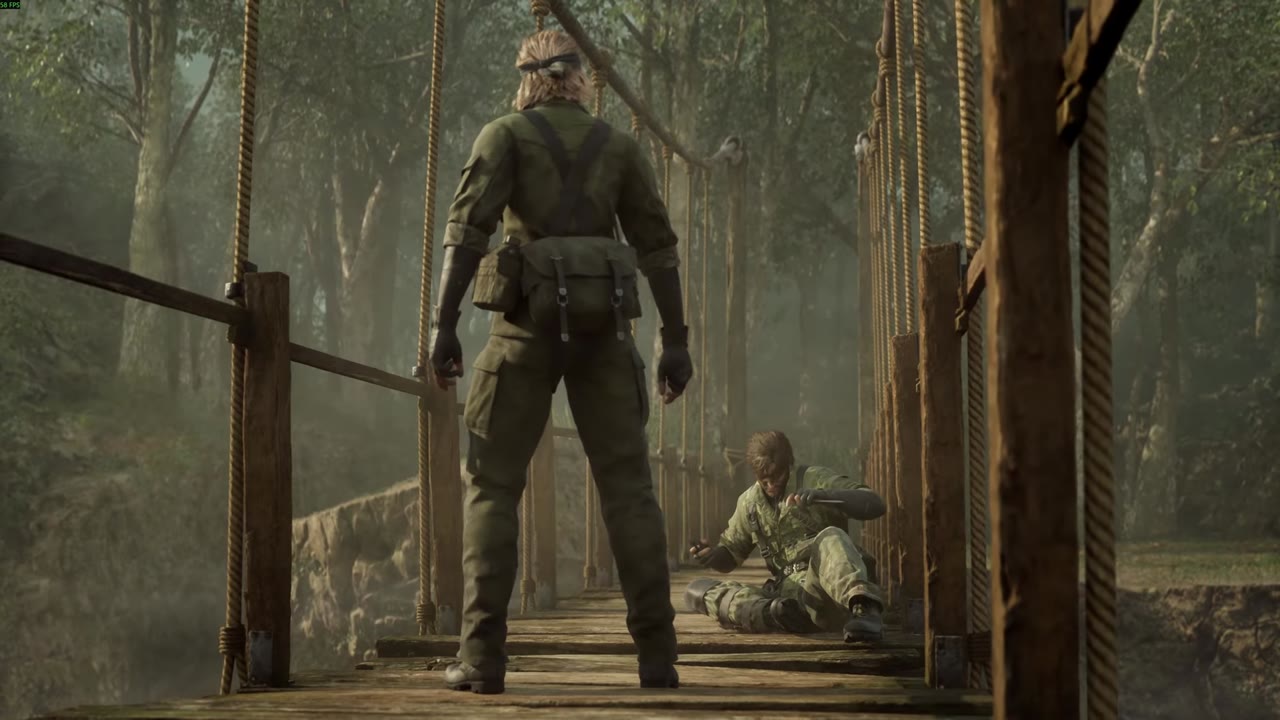
Metal Gear Solid Delta once again puts players in the shoes of Naked Snake as he tries to prove the United States' innocence after a Nuclear warhead was detonated at a Russian research facility. Through moments of combat, trust, and betrayal, Snake is forged into the legendary soldier Big Boss before his fall from grace. By utilizing the original voice work, music, and story themes, Delta faithfully retells the story of Snake Eater with its emotional impact intact. Conversely, this also means that cinematics still dominate play time. If you want to play a Metal Gear Solid 3 remake, though, one would hope that you like viewing exposition through cutscenes and radio chatter. If you don’t, they can be easily skipped as always. The new graphics bring a host of new emotional context to several scenes, and despite knowing many of them by heart, I was enjoying seeing new subtle nuances in the animations.
Gameplay
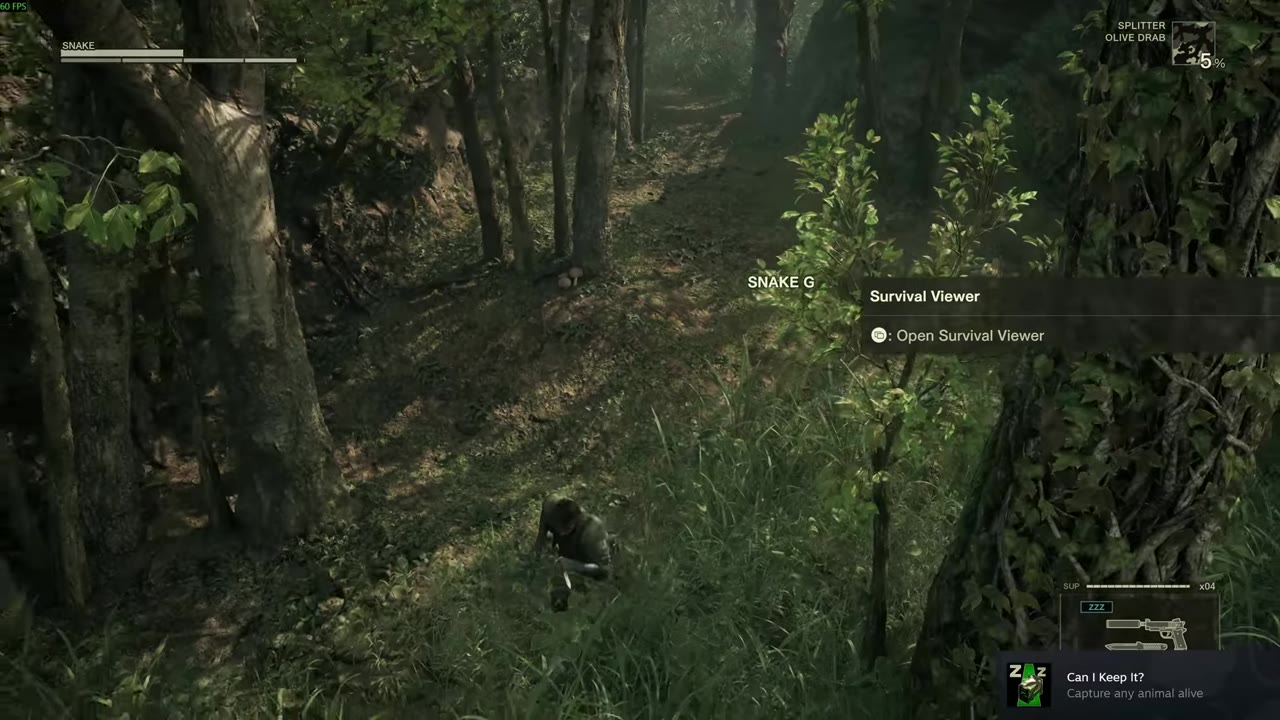
When you start up a new game of Delta, you can select between legacy and new styles of play. These are misleading labels, as technically, both styles were present in Subsistence onward. Legacy gives players the classic fixed camera perspective and stationary aiming, which the classic Metal Gear Solid titles were known for. The new style introduces third-person camera control, similar to that featured in Subsistence, with the added ability to move while aiming and third-person aiming, as seen in the 3DS release. Also, a shout-out to the 3DS version for how the new title screen is portrayed!
Both modes feature new control schemes to try and modernize play, with aiming and firing being separated, and Snakes' roll and crouch buttons also being separated. Snake is also given a crouch walk stance, not found in the previous console versions of the game. Once again, these features are based on the 3DS version of the game. Controls work well, and after getting used to the D-pad handling inventory selection, again from the 3DS version, it was a smooth ride to completing the game. If you can’t stand the controls as they are presented by default, Delta features numerous customization options for button mapping and input behaviors for you to really make the experience your own.
If you have previously played through any iteration of Metal Gear Solid 3, nothing about the journey of Delta is going to surprise you. You are literally replaying the 20-year-old classic with a fresh set of paint and controls. You are tasked with making your way through areas either by using stealth or guns blazing, with both lethal and non-lethal means at your disposal. Certain weapons can equip silencers to help you keep a stealthy approach, but they degrade over time, unlike your tranq pistol in Metal Gear Solid 2. New silencers can be found throughout the game, but running out can make for some interesting encounters.
CQC is also still usable, and an indicator lets you better know when you are in range to use it. The best way to get close to an enemy to use CQC is to use the stalking movement feature that is assigned to the L1 button by default. In the original versions, this was assigned to the D-pad, so I like this implementation more. Without using stalking, you run the risk of guards hearing you before making it to them and triggering an alert. Though if you are quick enough, you can still make them eat dirt before that happens most of the time. One of the great features of CQC remains the ability to grab enemies and either interrogate them for useful information, use them as a meat shield, or just kill or knock them out.
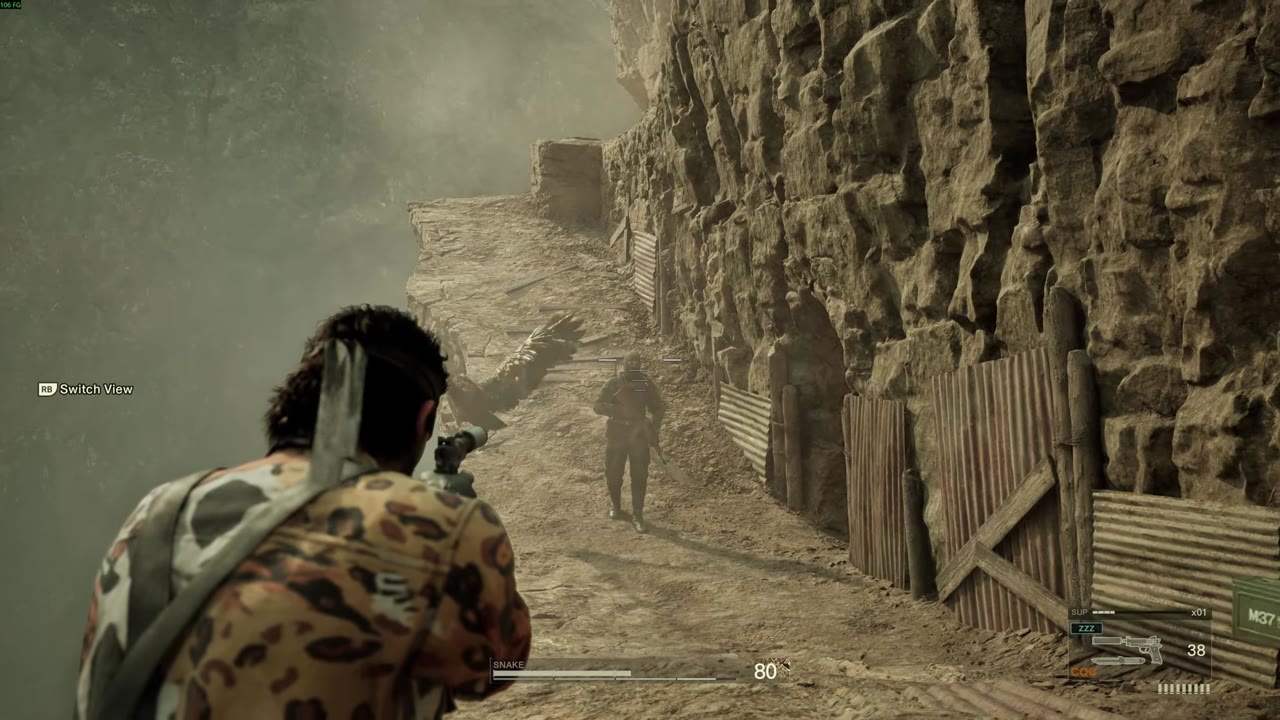
Enemies are unfortunately pretty easy to get around thanks to their PS2 behaviors. They can’t see very far a lot of times, and they give up on their suspicions of you quickly. If you have a camo index of 55% or higher, you can easily run around without a worry in many locations. At 70% or higher, they are practically blind until you are much closer. This scales with difficulty, so it isn’t always the case, but new players shouldn’t have too much trouble getting that full stealth playthrough if desired. With the quicker save handling and autosaves as you enter new areas, you can easily save scum your way to a perfect game. I do like the new tool tips and compass being available to new players, to also help them better understand how to play and where to go. Thankfully, they can also be turned off if desired.
Camo handling is so much more streamlined in Delta as well. By using the D-pad, you can bring up a quick selection of different camo layouts to choose from on the fly. You will still need to go into the main survival viewer to find all of the camo options, but after using one, it will be added to the quick access menu. Various injuries will also bring up a quick selection icon to open the healing menu, helping reduce the amount of time you will spend in the survival viewer. The radio has also been assigned to the D-pad, making food the only thing you will consistently need the survival viewer for besides the area map. I appreciate the way this makes the game pacing feel more fluid, and it is a great quality-of-life change.
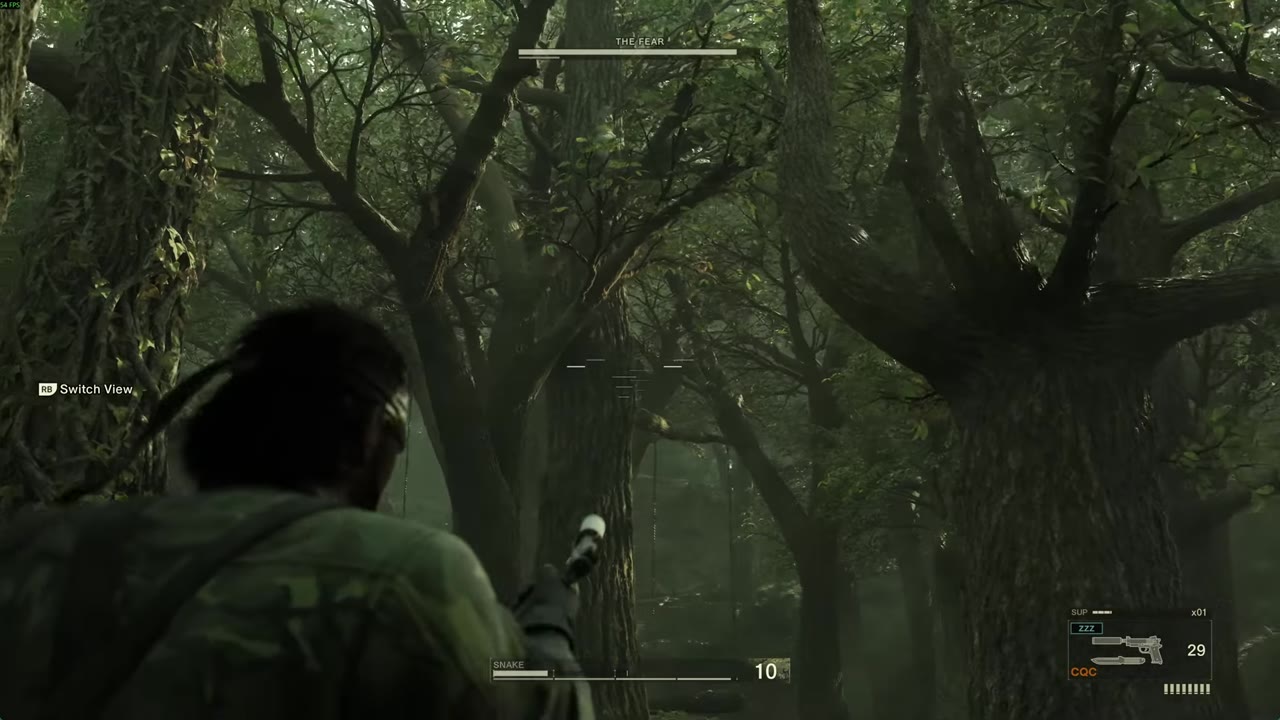
Boss fights remain my favorite element of Delta, and the encounters are still iconic. Ocelot getting repeatedly bested by Snake and gaining a fascination for torture sets who he becomes in other MGS titles. The fight with The Fear can still be tense as he hops from tree to tree and attacks you with poison arrows. The new graphics make it easier to see him, but it doesn’t ruin the experience. The End’s sniper fight remains as slow-paced as ever, and his camouflage makes it very hard to see him without the thermal googles. The Sorrow trolling players who go in guns blazing is also still great and unnerving. The Fury and The Pain are the weaker fights overall, but still fun to beat. Then, of course, you have the final fights with Volgin, the Shagohad, and the Boss that bring the experience home with mixes of heavy combat and CQC.
Level design is again the exact same as that of the original game, with areas being broken up with a load time between them. Each area has the same layout as the original game, so veterans will immediately know where everything is. This is perhaps the one thing I wish had been changed for the remake after playing the bigger environments of Metal Gear Solid 4 and 5. You could have had more room to play in, and encounters could have felt fresh to returning players. But Metal Gear Solid 3's layout has always been one of my favorites, so I am not completely disappointed by this missed opportunity. It also let me easily collect each of the Kerotan frogs with ease as a result. Though the new Ga-Ko is a different story, I will find all of you darn ducks soon!! Another new collectible added to Delta is film canisters that unlock videos for you to enjoy after beating the game once.
Delta also marks the return of a few features that haven’t been seen in Metal Gear Solid 3 since its PS2 iterations, with Snake vs Monkey and the Guy Savage nightmare sequence! Xbox players get a Bomberman spin on the Snake vs Monkey mode instead, but you basically have to capture all the creatures in an area to beat the stage. It is a fun addition to the game that I enjoyed in the original versions, so it is great to see it return! The Guy Savage nightmare sequence was weird to discover back in the day, as you have to leave Snake idling in prison for a while to experience it. Now, you can do that, or after beating the game, it becomes selectable from the main menu. Developed by Platinum Games, this New Guy Savage mode is a fun distraction to play through!
Audio
The audio work for Metal Gear Solid Delta remains a masterclass experience. Voice work is fantastic, and the score hits as hard as ever. New filters have been added to radio calls to give them a more transmitted feel, which works well enough to not feel out of place. Sound effects are crisp, and the jungle environment houses many mysteries with its ambiance. The only other noticeable change to me from prior versions is the redone Snake Eater theme that plays in the game intro and the famous ladder climb. It sounds ok, but the redone timing isn’t my favorite.
Visuals
The visual experience has been a blast to play through and watch. The environments are beautiful to look at, with dense foliage and new details scattered along the jungle floor. Though areas retain the original PS2 layout, they don’t look flat and squared off like some did previously. Lighting is awesome, and the night sequences really give off a new feel. Reflections are great and add to the overall feel of realism. Sadly, some of the more atmospheric moments aren’t as impactful with the fog, originally used to hide PS2 rendering distance, being mostly removed from all scenes. But character models are wonderfully detailed with textures taking everything up a notch. Animations especially convey more life into these classic interactions, and I have again greatly enjoyed rewatching each minute of them! CQC Animations also got a complete overhaul, making them incredibly satisfying to use.
One interesting aspect of the new graphics is its use of filters to impact the output image. When you select legacy style, it uses the more yellow color of the original game. The new style has filters disabled by default. You can enable or disable filters at any time from the options menu, and there are a few to choose from. I thought I would enjoy playing with filters disabled, but I quickly found myself turning the legacy filter back on to make the game feel more like the original. I found the other filtering options weren’t to my taste either, but it is fun to see them included regardless.
There are still some bugs to work out in the visual experience, though, as doing reloads has caused numerous moments where parts of the terrain would render incorrectly. It looks silly and shouldn’t be a thing, so hopefully it will be patched before long. Performance is also another area where the game absolutely drops the ball for console players. Since I played through the game on PC, I have been able to get a solid 60 FPS out of the experience with some graphical tweaking on my RTX 5080. Since Delta is a slower game, though, I decided to leave everything at Ultra and still managed a good 50-60 FPS average in most scenes. For the latter half of my playthrough, I enabled a 120 FPS mod with frame generation, and the experience was good with only minor ghosting being noticeable during play. And yes, I did experience graphical glitches even before any mods were in place.
What It Could Have Done Better
Overall, I love the experience Metal Gear Solid Delta provides players, but it still has things that need to be addressed. As previously noted, performance on consoles is not ok and it needs to be addressed. On PC, things have been fine for me as I have a powerful GPU, and settings are better customizable, but better optimization still needs to happen. Weird texture glitches on reloads also need to be fixed. During the final Motorcycle escape sequence with the latest patch, I also encountered several crashes. The game being $70 is also outrageous, considering that, at its core, it is still the same game from 2004. This would have been a perfect $40-$50 title to reignite interest in the franchise. Gameplay-wise, it feels like Snake moves slower than in previous versions of the game. Crawling in first-person intrusion mode also feels a bit jerky with its more realistic approach. Several of the pre-rendered cutscenes appear to use AI upscaling from previous versions of the game, which don’t look great and have weird cropping, making them feel claustrophobic.
Replayability
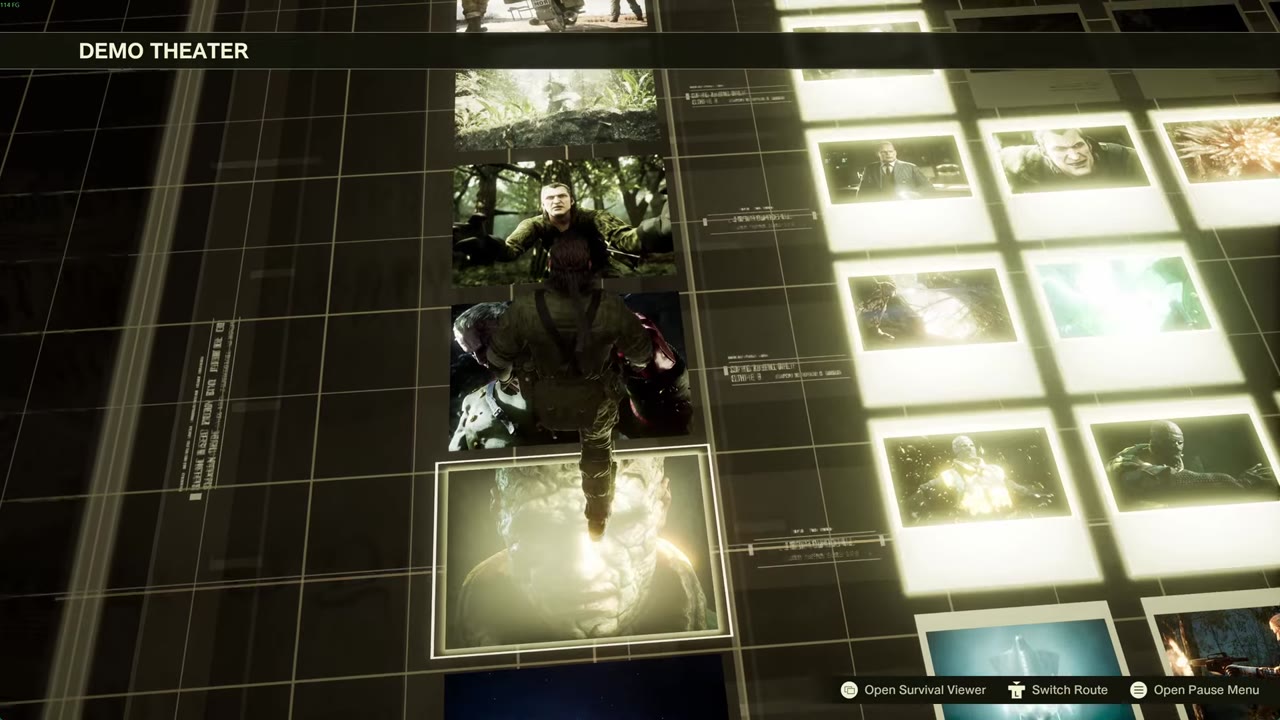
With multiple difficulties and new collectibles in addition to the original ones, there are many reasons to replay Metal Gear Solid Delta. Several unlockable titles further enhance these playthroughs with various challenges to collect them. After the campaign has played out, the Guy Savage and Snake vs Monkey minigames can still provide more time with the game. The Secret Theater and demo theater are also fun to experience.
Verdict
While not perfect and likely to be debated for years, I am happy that Metal Gear Solid Delta is here and brings with it a modern coat of paint and quality of life changes! While it still has some issues to work out with console performance and lingering crashes, I enjoyed my initial playthrough of the game. While I don’t think this is a game for everyone at its current price, once it goes on sale, this will be a great way for newcomers to the Metal Gear franchise to experience the story of Snake Eater. For bigger fans of Snake Eater, you may find the price more acceptable to relive a great entry in the Metal Gear saga!