Disclosure: The company provided this product free of charge for review. All opinions in this review are my own.
I recently played through all of Metroid II for the first time. It was a daunting experience when I first started, but by the end of the journey, I found it incredibly enjoyable. Exploring SR388 with Samus’ enhanced abilities over the original NES Metroid feels incredible, and it cemented many of the features we have come to expect out of Metroid titles that would further be expanded upon with Super Metroid. In 2017, in collaboration with Mercury Steam, Nintendo released Metroid: Samus Returns, a remake of the original Game Boy game that brings players back to SR388 to stop the Metroid threat. I skipped the game back when it originally released, but diving into it now has been an interesting experience and one I am happy to have finally done!
Story
After Samus defeated the Space Pirates on Zebes and foiled their plans to use Metroids to take over the galaxy, the Galactic Federation sent a research team to SR388 to see if Metroids could still pose a threat. The research team discovered that SR388 was teeming with Metroids, and contact was soon lost. The Galactic Federation sent in rescue teams, but communication with them was quickly lost. The Federation deems that Metroids are too much of a risk to the galaxy and need to be exterminated. Samus is called upon to head to SR388 and eliminate every last Metroid!
While the story for Metroid: Samus Returns remains unchanged from its 1991 original, it is finally presented to players in-game instead of relying solely on the game's instruction booklet. It is presented in a text-based fashion before a cutscene shows Samus arriving at SR388 to begin her mission. While the intro is the only laid-out story segment of the game, Samus Returns utilizes several in-game cutscenes to enhance parts of the journey. The use of environments to further tell its story is also a highlight!
Gameplay
Like the original Metroid II, Samus Returns tasks players with exploring SR388 to hunt down every last Metroid. While the basic premise is still the same, the journey has a completely different feel. Being on 3DS instead of Game Boy makes everything feel faster, and environments are more populated with enemies. Samus' basic combat tech from the previous 2D Metroid games remains intact, and you start the game with your basic Beam and Missile loadout. Samus Returns uses the right shoulder button to quickly change between Beam and Missile capabilities as first introduced in Metroid Fusion. It is a far better system compared to Super Metroid's inventory selection and is a good fit for the game.
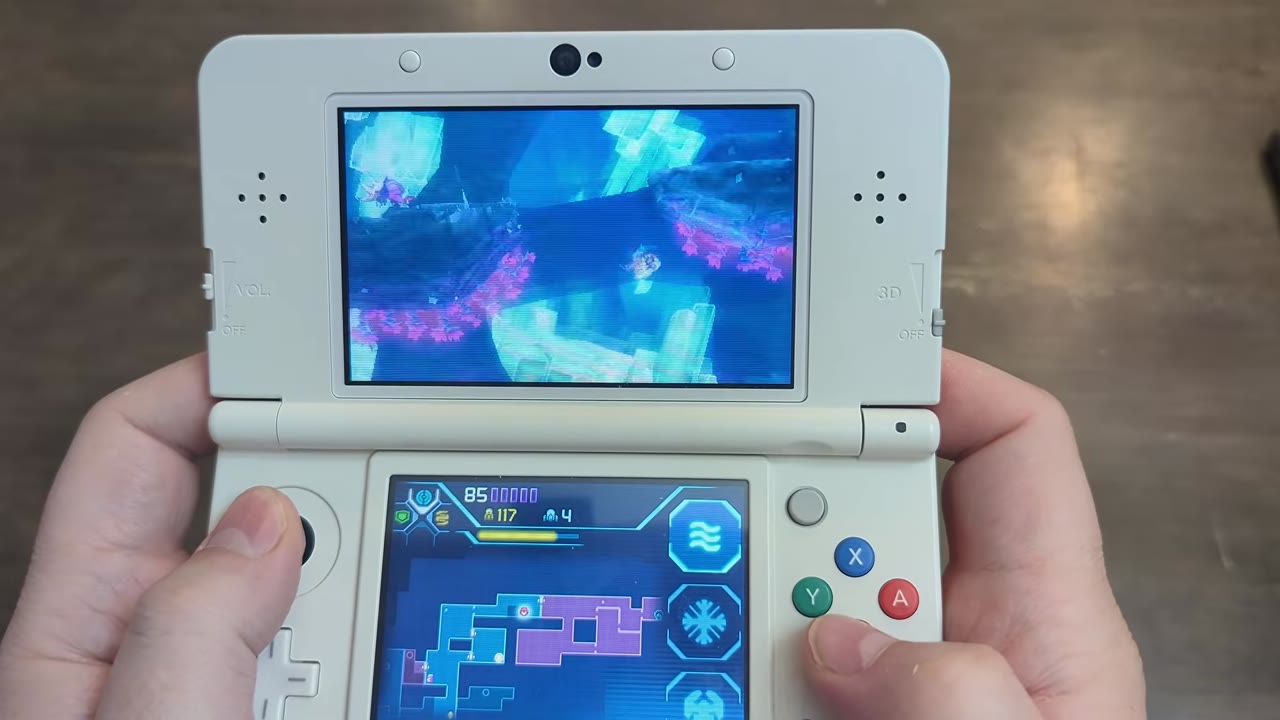
You will quickly discover that the game dynamically uses the Grapple Beam when needed, so you can make it through the entire game without manually equipping it. Samus Returns introduces a new free aim mechanic into the game that players activate by holding the left shoulder button. When aiming at enemies, the target line will turn red, letting you know you will land a shot. When aiming at grapple points, it will turn blue, and the Grapple Beam will be deployed. This works in both traversal and enemy encounters, making it wonderfully streamlined!
Another addition to Samus Returns from prior Metroid games is the inclusion of Super Missiles. These are powerful weapons that can make quick work of practically every enemy in the game. But like the beams, you can quickly change between them and normal missiles on the fly, thanks to the bottom touch screen. Power Bombs are introduced into the game rather late, but they, too, are easy to equip by holding R while in Morph Ball form. Like all previous Metroid titles, Missiles, Super Missiles, Power Bombs, and Life can be extended by finding power-ups hidden throughout SR388.
In addition to the standard weaponry, Samus Returns introduces a new melee attack into Samus' arsenal. You can use this attack to push some enemies away from you in a pinch, but its main use is to counter incoming physical attacks. An enemy will flash whenever they perform a counterable attack, and a successful counter will allow you to one-hit kill most basic enemies. During Metroid and other boss fights, these counters allow you to deal massive damage and are often accompanied by satisfying animations.
While it is a fun system that adds to overall gameplay, I am not fond of how it can slow things down in the early game. Enemies are hardy in Samus Returns, so blasting them with your beam in the beginning can take time. Instead, it is better to let them approach and attack so you can counter and one-hit kill them. It breaks the feeling of fluidity and instead makes you wait. Thankfully, you quickly have enough missiles or Beam upgrades that make it less necessary, restoring a more natural feel to progression.
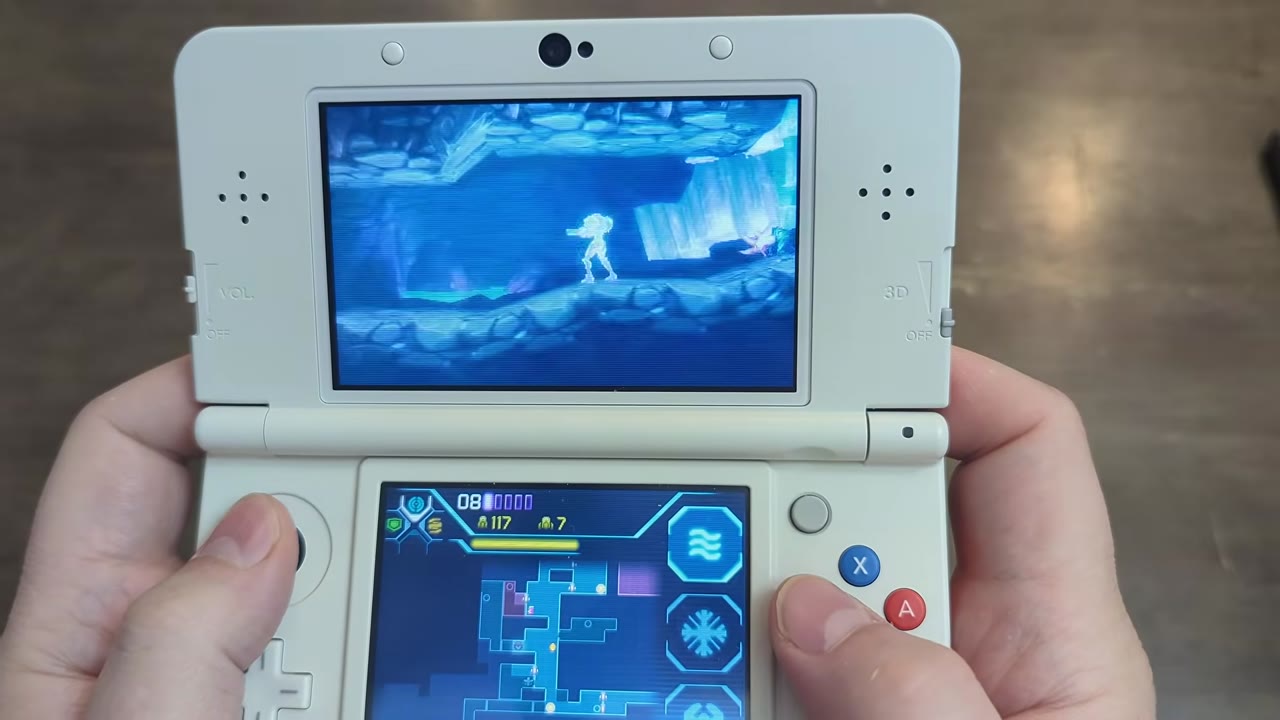
The map of SR388 has been expanded upon and offers more to explore. Some parts feel similar to the original game, and they provide an interesting sense of nostalgia when exploring. The fact that you get a map this time around is also incredibly welcome, coming into the experience straight from the original. Unlike other Metroid games that feature maps, Samus Returns doesn't have any map download stations and instead fully relies on your movement around SR388 and the scan pulse to reveal everything. This was a neat experience and one that fits the lore of the Metroids destroying everything on SR388.
Samus' movement again makes exploration a key highlight of the gameplay experience, and everything from the original game has been brought back. Exploring rooms with the Spider Ball is excellent, but some hazards keep it from being abused like in the original. A cool addition to the Spider Ball's utility is that it keeps you from being blown away by wind, which is essential for success in a few boss fights! The Space Jump and Screw Attack combo at the tail end of the game remains one of my favorite elements of a Metroid title and it’s incredibly pleasing here.
One thing I found interesting during my playthrough of Samus Returns is how much easier it is to wall jump and bomb jump compared to other Metroid games. I would frequently use both to explore areas that were meant for later movement tech, like the High Jump Boots or Space Jump. The game seems to have accounted for this possibility, though, as I never felt I was exploring areas I shouldn't be in. There are the obvious progression blocks put in place with doors requiring certain items to open, lava rooms requiring the Varia Suit to enter, or water areas that can't be fully explored without the Gravity Suit, but otherwise, if you want to get somewhere, you typically can.
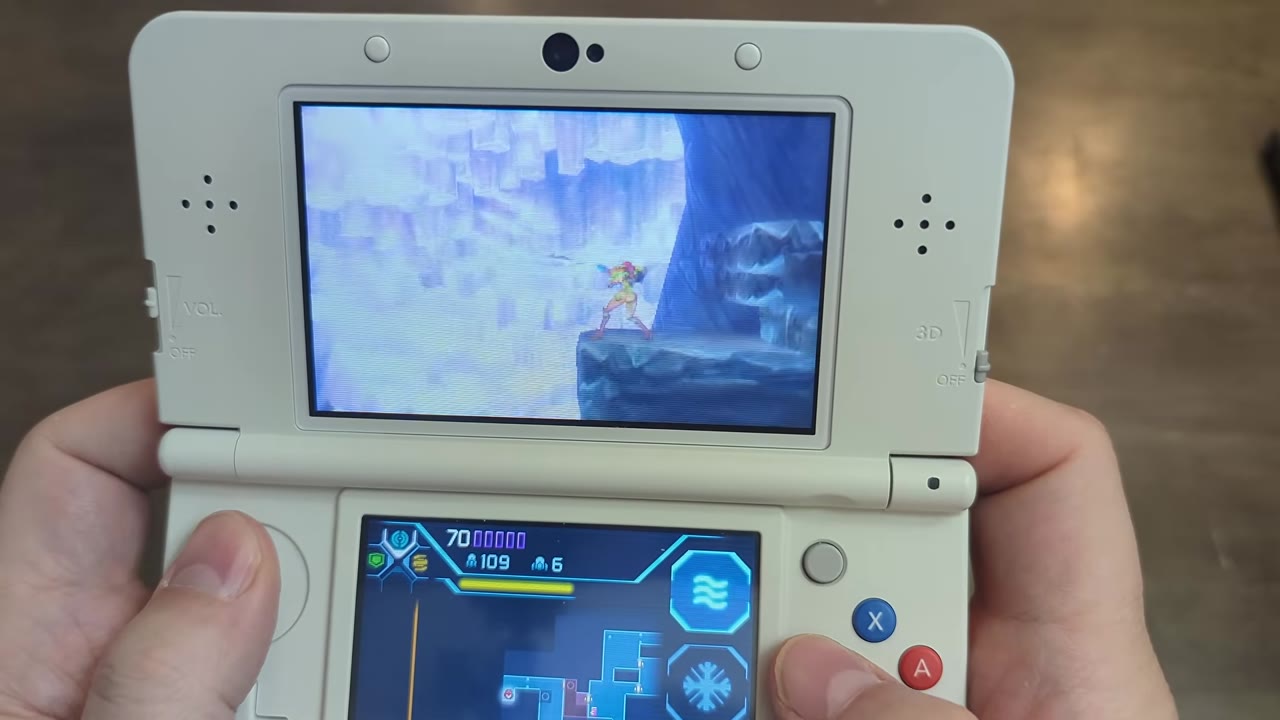
Metroid fights are my close second favorite part of Samus Returns. While each encounter remains similar for each variant of Metroid, taking them down with various attacks and counterattacks is incredibly satisfying. The animations showing the evolution of Metroids are also highly enjoyable. Alpha Metroids remain the most common fight, but they soon give way to the harder Gamma Metroids. The first few Gamma fights messed me up for a while, but they have a pattern that is easy to recognize and deal with. More interesting with the Gamma Metroids is that later fights have them retreat from one combat area to another, and you have to track them down. I'm torn on whether I enjoyed this or found it annoying. Zeta and Omega Metroids remain damage-dealing monsters, but by the time you encounter them, you can be so upgraded that you can easily tank them without worries. The Queen, however, was a far more enjoyable fight over the original game, and I had a blast experiencing it!
Samus Returns also features more original boss fights with the return of Arachnus, who still guards the Spring Ball powerup. The new Diggernaut gets a whole subplot to itself where Samus inadvertently reactivates the thing, and it later tries to hunt you down in a huge escape sequence. Finally getting to blow it away was satisfying, albeit difficult. The inclusion of Proteus Ridley as the game's final boss is fascinating to me. Since the entire Metroid Prime franchise is set between the events of Metroid and Metroid II, this helps bridge the gap in Ridley’s healing progression from the first game till we finally end him in Super Metroid. The post-credits scene showing a discarded cybernetic hand was an awesome touch, and that X Parasite reveal is so good!
Audio
I have a love-hate relationship with the audio of Samus Returns. On the one hand, there are very crisp sound effects in use for the 3DS handheld, and they sound good coming from the console's speakers or headphones. The remixed and original music found throughout the game is an excellent accompaniment to the feeling of the environments and is far better than that in the original Game Boy title. Creature cries and other environmental factors are likewise top-notch! This is offset, however, by the return of an incredibly obnoxious low health warning and the incessant pinging of breakable blocks when doing a scan pulse. Sadly, it does bring down the overall audio experience. I can still hear them, they haunt me. I don’t know if my ears will ever recover…
Visuals
What It Could Have Done Better
Thankfully, I have only minor gripes with my Samus Returns journey. The over-reliance on counterattacks messed with the early flow of the game in a way that I didn’t always enjoy. I love the feature as a whole, but I shouldn’t have to use it on every basic enemy for the most efficient progression. Thankfully, a few upgrades in and you can handle things more traditionally. Enemy variety is also lacking, with new areas having stronger versions of past enemies, with few new additions. Every lava area using a remix of the Norfair Ancient Ruins Area theme also feels a bit lazy, almost like it was a placeholder that got left in when it was only supposed to be in a few places. It is also annoying that you can’t collect everything in the game before defeating the Queen Metroid. Numerous upgrades are locked behind obstacles that can only be removed by the baby Metroid. Defeating the Queen is supposed to be a victory lap moment, not a time to backtrack through every area of the game to get items… A more serious problem I faced was losing my space jump from time to time, which resulted in a few deaths to Ridley. More of an issue with the 3DS than the game, but I also found my hands cramping numerous times throughout this playthrough. I need to look into a nice grip addon for the 3DS.
Replayability
Unlike the original Metroid II, there is a ton of replay value in Samus Returns. While beating the game under certain time requirements is still a goal, completing the game once unlocks a hard mode that you can choose when starting new playthroughs. Considering how much damage everything does on normal, this is a mode I am not interested in attempting at the moment. Collecting every item in the game also unlocks Chozo Memories, depicting the Chozo history on SR388, which is a fascinating gallery to look at as a fan of the franchise. Amiibo are also supported, which can grant access to a Fusion mode, but I was not able to test out this functionality as I don’t own any to try.
Other Versions
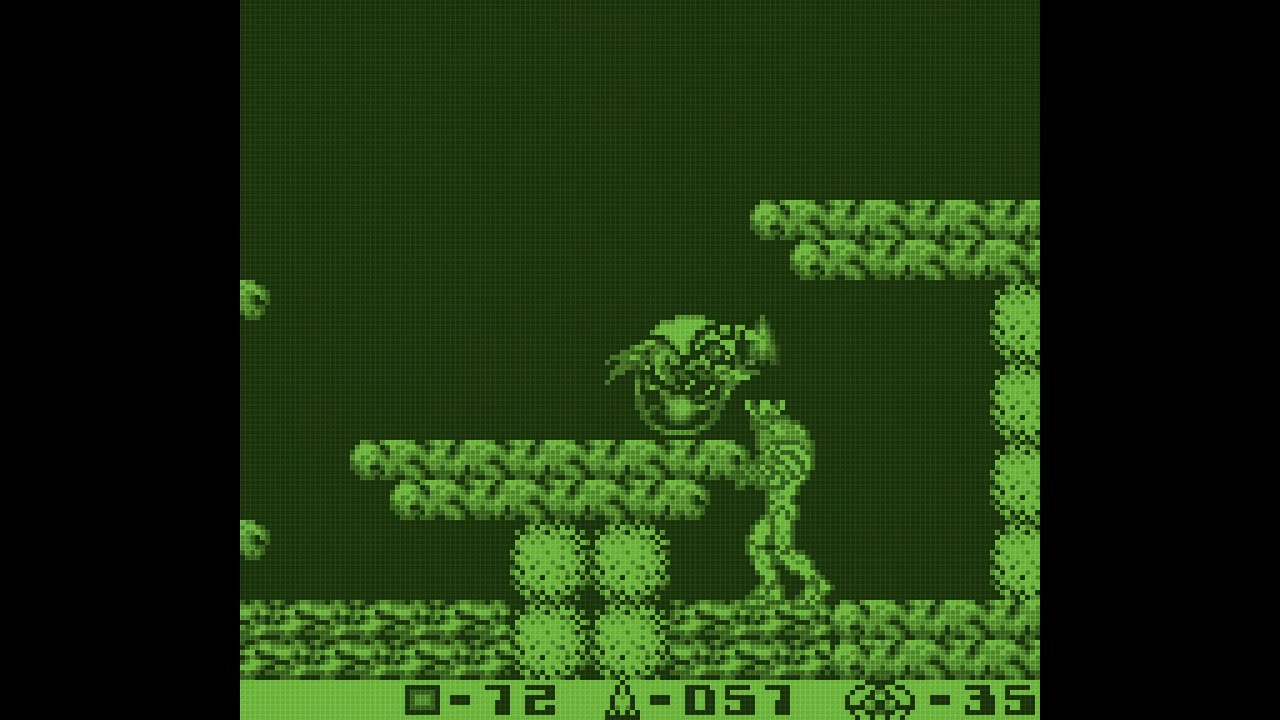
While Samus Returns is likely the way I will choose to experience the events of Metroid II moving forward, there is no denying the charm of the Game Boy original, which I still think is a great way to experience the game. Honestly, I would likely default to the Game Boy version despite its age if it had only included a map. But the original Metroid II is far more accessible these days compared to Samus Returns being available on the Nintendo Switch Online Game Boy app. Samus Returns is locked to 3DS hardware, and prices for the system continue to rise. For a more traditional Metroid II experience, there is also AM2R, which presents the events of Metroid II in a Metroid Zero Mission 2D style and gameplay.
Verdict
Metroid: Samus Returns is an excellent modernization of a great Metroid title. While I do get mildly annoyed at it sometimes, it provided me a ton of fun overall. It also serves as an excellent foundation for Metroid Dread. While I will still regard the Game Boy game highly, having only beaten it for the first time two weeks before making this review, I will likely never return to it now, except on the rare occasion to remind myself of it and its importance to the franchise. If you haven’t checked out Metroid: Samus Returns and you still have a 3DS system, it is an easy recommendation for fans of the Metroidvania genre!