Metroid: Other M for the Nintendo Wii was released back in 2010 and has been so negatively panned by fans that it is an entry in the franchise I never bothered to play. Despite owning the game shortly after launch, I never played it further than the initial prologue for a few of my emulation tutorials. After covering several Metroid games over the last few weeks, my channel backers felt it was time to face Other M head-on and watch me squirm! I had a low bar heading into this one, but surprisingly, it fares far better in most regards than I feel it gets credit for.
Story
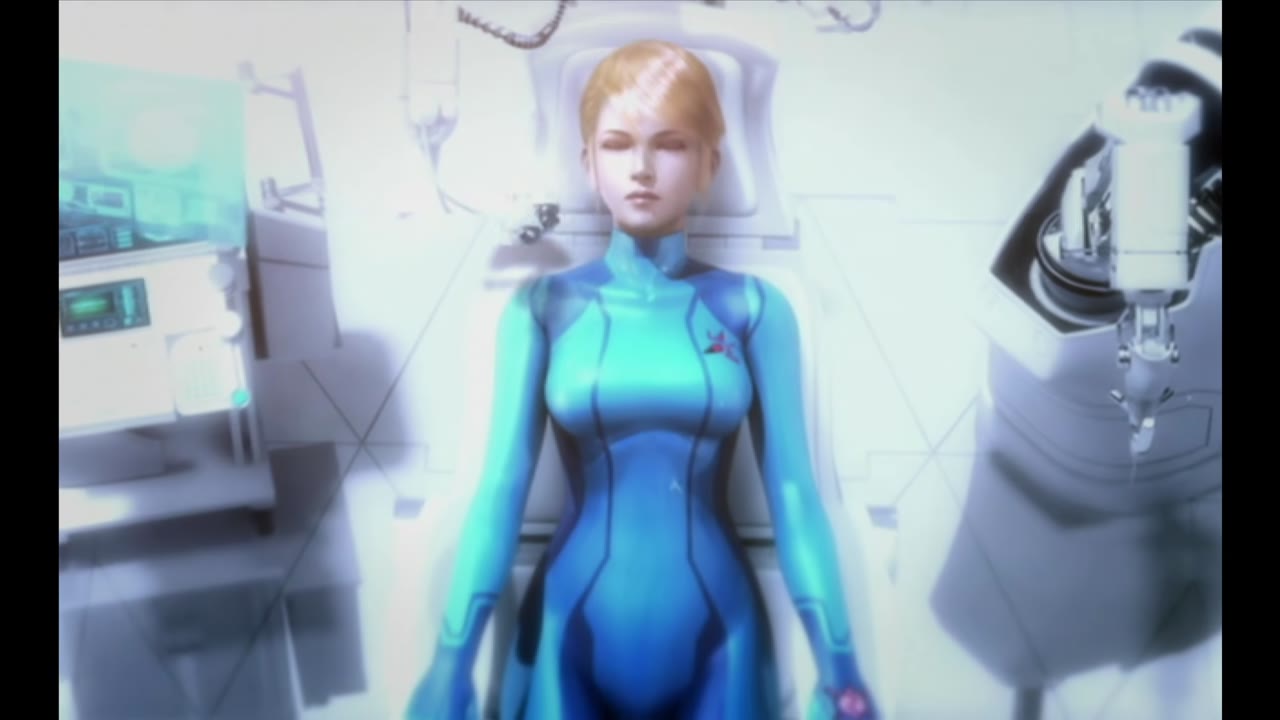
Samus Aran has just defeated Mother Brain, and Planet Zebes has been destroyed along with the last traces of all Metroids and Space Pirates. Samus returns to the Galactic Federation to report on her mission and undergo physical examinations. Samus reflects on the loss of the Baby Metroid and her once home planet of Zebes, but resumes her activities as a Space Hunter. Some time passes before Samus receives a distress call from a derelict station called the Bottle Ship. Arriving at the Bottle Ship, Samus runs into a squadron of Federation soldiers led by her former CO, Adam Malkovich. After some initial hesitations, the two groups decide to work together to unravel the mysteries of the Bottle Ship.
Metroid: Other M is more story-focused than any other game in the Metroid franchise, including Metroid Fusion. There is a metric butt-ton of exposition, and it is good to be aware of that before diving in, just in case story-heavy games aren’t your thing. Numerous cutscenes are featured throughout the game, with Samus providing her thoughts and feelings on each situation as they arise. The additional characters found throughout the game provide varying levels of interest, but many are mere throwaways for story purposes. While the plot treads similar paths to that of Metroid Fusion, there is enough intrigue provided by Other M that it stands up well. Some of the reveals were also genuinely exciting as a result! There are, however, numerous instances of cheesy moments and dialogue spread throughout the game. I can’t help but laugh at the thumbs up segment or the fact that Samus decided to call a traitorous shadow operative “the deleter”.
The most interesting aspect of the story was getting to better understand Samus as a character. Unfortunately, Metroid is a franchise that never explored its characters with any real depth in-game until Metroid Fusion, and most supporting materials released to that point are considered non-canonical. So, between Other M and Fusion, we get to finally understand who Samus is and what motivates her actions. Unfortunately, the localization and voice acting in Other M can lead to a less-than-favorable impression of Samus. Having killed Ridley, who killed her parents, witnessed the destruction of the Baby Metroid, killed off the Mother Brain, who used to be part of her life, and the entire destruction of a planet she spent a considerable part of her life on, I don’t find her depiction and PTSD symptoms out of character like many others seem to. I will accept that I am in the minority on that point.
Getting to see Adam and learn how he influenced Samus was also a neat aspect, considering his role in the plot of Metroid Fusion. I do, however, wish that some of the early game interactions between them had been adjusted to better flow with gameplay. Samus decides not to use her maximum potential after a brief first encounter with Adam’s squad, which doesn’t make much sense. After they agree to work together and Samus accepts his leadership position for the joint investigation, waiting for his authorization to use her abilities makes more sense from a storytelling aspect. Adam’s actions in-game have a considerable impact on Samus’ outlook, which wraps up her PTSD arc pretty cleanly to give us the Samus seen in Fusion.
Gameplay
Metroid: Other M is an interesting bridge between the 2D series of games and the 3D Prime series. Gameplay is set in a completely 3D environment, but level design is more in the vein of traditional 2D Metroid titles with first-person aiming opportunities. As a result, Other M remains an action platformer at its core with a focus on exploration, with some shooter elements. It makes the game unique as a result, but it doesn’t always deliver the cleanest gaming experience. Controls for Other M are handled through the use of just a Wii Remote in both sideways and upright configurations.
While sideways, the game uses a third-person perspective with fixed camera angles as Samus travels through the Bottle Ship. Movement is handled by the D-pad while shooting and jumping are assigned to the 1 and 2 buttons. Moving in a 3D space with a D-pad is awkward, and while it is usable, I don’t think I can say I was ever fully comfortable with it. During several platforming sections, it has caused me to miss jumps, and moving between things in the environment can also be affected by the changing camera perspective. This last point in particular can cause issues while trying to activate the later Speed Booster powerup. Random camera shifts will at times cause your moving direction to change as well, cancelling the speed build-up. A minor annoyance, but one nonetheless. But one thing I like about the jump is how high it goes right from the start! The High Jump Boots are starting equipment, so you get a great feel of verticality as you progress through the game. Wall jumps are also easy to manage, but unlike past games, they are more scripted affairs here.
As previously mentioned, the Speed Booster makes an appearance and can be used to quickly blow through an area or blast away enemies like in past 2D titles. The Shine Spark is likewise available, allowing Samus to do long directional leaps or to blast into the sky with a spectacular flourish. Near the end of the game Space Jump and Screw Attack are at your disposal but the implementation in Other M is far more restricted than other titles. Rather than giving the players free flight, this Space Jump has felt more in line with an altitude maintainer. You can gain some height, but never the feeling of being able to fly wherever you need to go. I can see how this might have been chosen to keep the Shine Spark and Grapple Beam relevant in the later game, but it feels weird when first using it.
Shooting is handled well thanks to Other M’s use of auto lock-on. Generally, just looking in the direction of an enemy will have you landing shots without much issue. It isn’t always 100% accurate, but accurate enough not to be an issue. Throughout the game, Samus can make use of standard and charged shots to better deal with opponents of varying strength. The included charge meter on the HUD is helpful to gauge charge level, along with relying on sound effects. Several beams are at Samus’ disposal throughout the journey of Other M, including the Ice Beam, which can freeze enemies in place or freeze certain areas on them for additional damage when followed up with a missile attack. The Wave Beam allows Samus to shoot through transparent surfaces to activate or kill enemies behind them. Finally, Plasma Beam is a heavy damage-dealing projectile that can pierce through multiple enemies.
A fun new inclusion for Other M is the Diffusion Beam for charged attacks. The Diffusion Beam is a spread attack that lets Samus take out groups of enemies with ease. Each of the beams stack, allowing for deadly bursts by the end of a playthrough! Other M has also added some fun finishers to the game that can be activated once an enemy's health is low. The enemy will enter a stunned state, and by approaching them and firing, you will activate the finisher. Several enemies can also be defeated by jumping on them and delivering a powerful charged shot at point-blank range. If not done quickly, though, enemies will toss Samus to the floor. Several boss fights make use of both mechanics to deliver higher damage opportunities compared to standard weapon use, and they are fun to watch!
Morph Ball mode can be activated by pressing A, and I appreciate that you can use Bombs and the Spring Ball functionality out of the gate! Several surfaces can be bombed, like in other Metroid titles, to expose new routes to advance your exploration. Bomb Jumps aren’t easily accessible in this game as they launch you out from the initial blast, but at times, I did have to make use of bombs and Spring Ball to get out of a few tunnels. Power Bombs are handled in the same fashion as charged shots, but they don’t become available until the very last moment of the main game, which continues one of my least favorite Metroid trends.
One cool aspect added to the movement is a dodge ability that you can activate with a press on any direction of the D-pad when an oncoming attack is near. This dodge makes you invulnerable to damage and can be used to avoid even seemingly larger attacks without issue. It can also be quickly activated to chain dodges for the more intense fights. Unfortunately, there will be times you don’t get the timing right, and other times it will just flat out refuse to activate. Its inclusion, though, gives Other M yet another unique aspect compared to other games in the franchise, and I will say I like it more than the counter found in Samus Returns or Dread.
By shifting the WiiMote into an upright state and pointing it at your screen, Other M shifts into a first-person perspective that lets Samus better look around her environment. This is also how Samus utilizes Missile capabilities to use on enemies and the environment. By using the WiiMote pointer, you can lock onto enemies or other objects in the environment to attack. Using the B button allows you to pan the camera around. While cool in theory, this has been my least favorite aspect of Other M. Switching perspective can be slow, and the lock on reticle doesn’t always appear as fast as needed to stop the oncoming enemies.
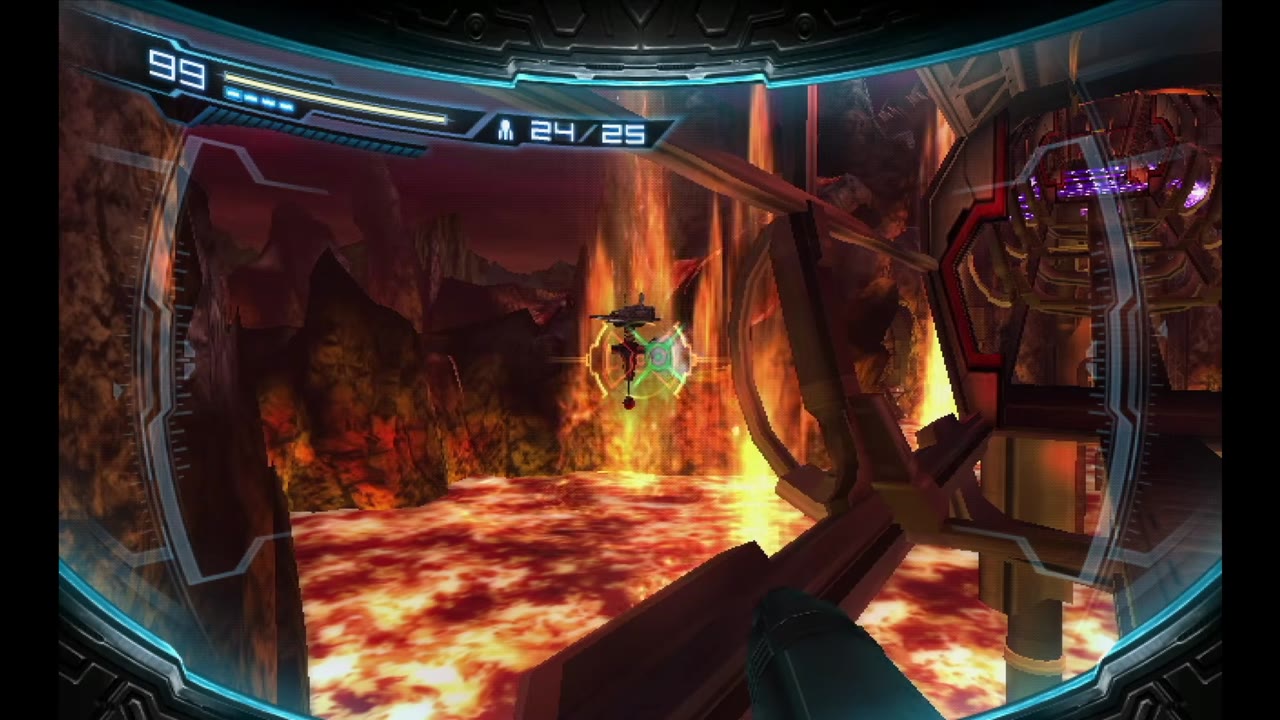
I have found it troublesome to activate the dodge ability in this mode as well, leading to it causing me the most damage and deaths throughout my journey. Enemies are just faster than it, and even though it gives a temporary slowdown when activated, it just isn’t enough to compensate, and it is required far too often. Missiles eventually get upgraded to Super Missiles that require a full charge to activate at the cost of five individual missiles. Seeker Missiles also become available to hit multiple targets, but they too often fail to help in many situations that involve faster enemies. Another ability players will make use of in this first-person mode is the Grapple Beam. Several Grapple points can be found through Other M, and I like how they will glow green when within target range. By pointing the reticle at the point, the beam will automatically fire, and you can move between multiple points with ease.
The one benefit to the Missile system in Other M, though, is that you rarely have to worry about ammo. You start the game with 11 missiles and can find expansions throughout the Bottle Ship. Each expansion only provides one extra missile compared to the three to five of other titles. While odd, Other M doesn’t rely on ammo the same way as other Metroid titles. Other M has no item drops at all in the entirety of the game. Instead, when you run out of missiles, you can merely hold the WiiMote upright and hold A to charge your entire supply of Missiles. You also use this method to do emergency heals once you hit a certain health threshold. The amount of damage you can heal from is expandable by finding upgrade tanks, so it is possible to go from the brink of death to an acceptable level of health. But it is often too slow to use in quicker-paced fights. Every save point also delivers a full heal and missile charge so you can use them as often as needed.
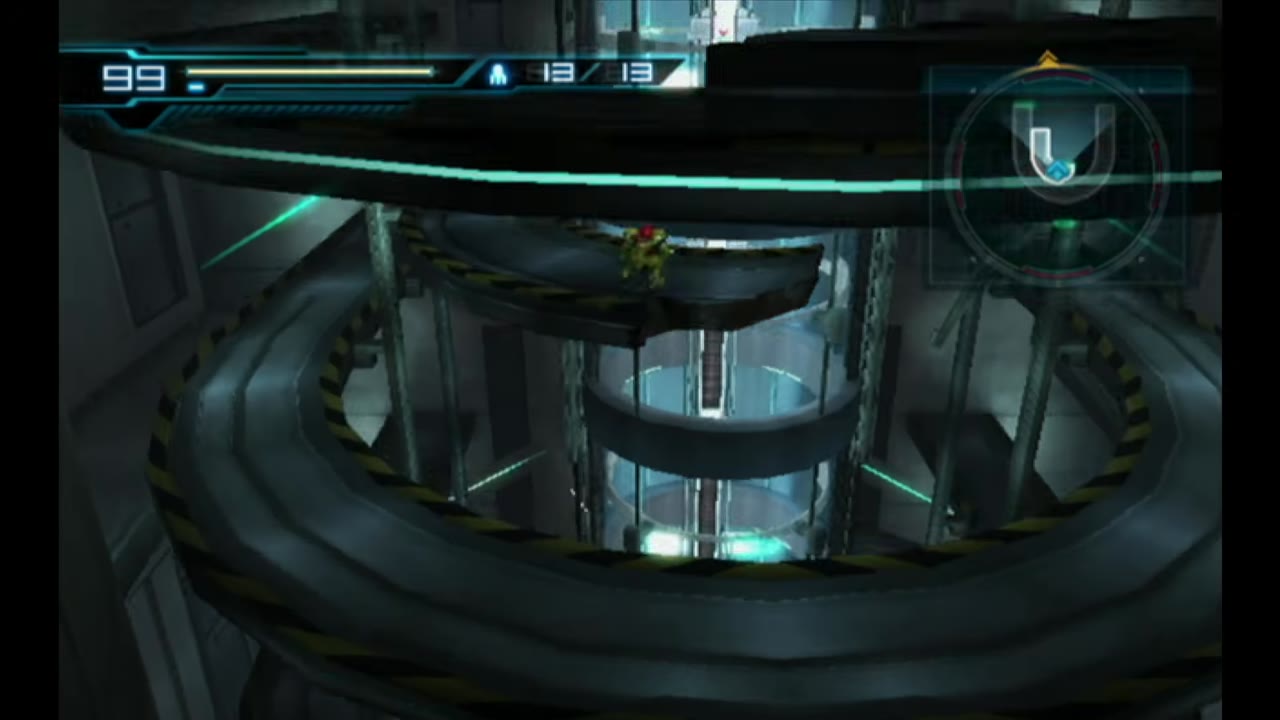
Other M uses a waypoint system to help players navigate around its map. There are 4 main areas to explore, and each is a decent size. There are numerous instances where the in-game map and the way the environment is presented to the players don’t match up, which can make navigation more difficult. Numerous areas also feature different levels that overlap, which can make reading the map more difficult than it should be. I found myself stumped a few times through my journey, but solutions always presented themselves when I would stop to think about what I had just accomplished or gained access to. Thankfully, the game plays a bit more linearly, so these issues aren’t as problematic as they could have been in other Metroid environments. There is a good amount of backtracking as a result of the lack of areas, but it never felt like a drawback as I played, except in one instance at the end of the main game, where you have to immediately go back to a place you just left.
Other M has an ok selection of enemies, both old and new to the franchise, to deal with as you play. As you progress, many will also become harder to deal with to keep things more interesting. Using the various abilities to deal with situations can be a blast, but again, anything involving missiles can be a drag. I would often default to the Charge Beam instead to deal with most enemies, despite it taking considerably longer most of the time. Numerous doors won’t unlock until every enemy in the area is defeated, but at other times, you are free to avoid them to get where you need.
The Boss battles throughout Other M are usually a cool experience. They can be a small room experience of taking down an enemy with Adam’s squad, or be in large rooms taking down a huge Lava Whale thing. The spectacle is a blast, and even the more odd inclusions like fighting The Deleter in a cargo lifter feel perfectly in tone with the game. There are a few bosses that caught me completely by surprise, and they further elevated the game as a whole as a result! The one recurring miniboss who unlocks the Seeker Missiles got a bit annoying after a while, but I would be lying if killing it didn’t bring me an immense sense of satisfaction for all the trouble it caused! One interesting aspect of Other M, though, is that finishing the main game isn’t the end of the story, and you will find one last boss to take down after the credits!
Audio
Metroid: Other M is a mixed bag in the audio department. The Music is fantastic, with some great remixes of themes that stand out from the rest. Sound effects likewise pop and sound perfect within the game’s world. Environments and enemies further add to the world as a whole. Best yet, the game does support surround sound to further immerse us in the best aspects the game's audio has to offer! But I find the voice work can help contribute to the negative perception of the game. It isn’t terrible, but it isn’t as good as it could have been. Supporting characters can sound fairly generic overall, but some shine through like Anthony. Samus, however, feels a bit more robotic through more lines than you would expect. There are moments where it can shine, but then it goes back to being underwhelming.
Visuals
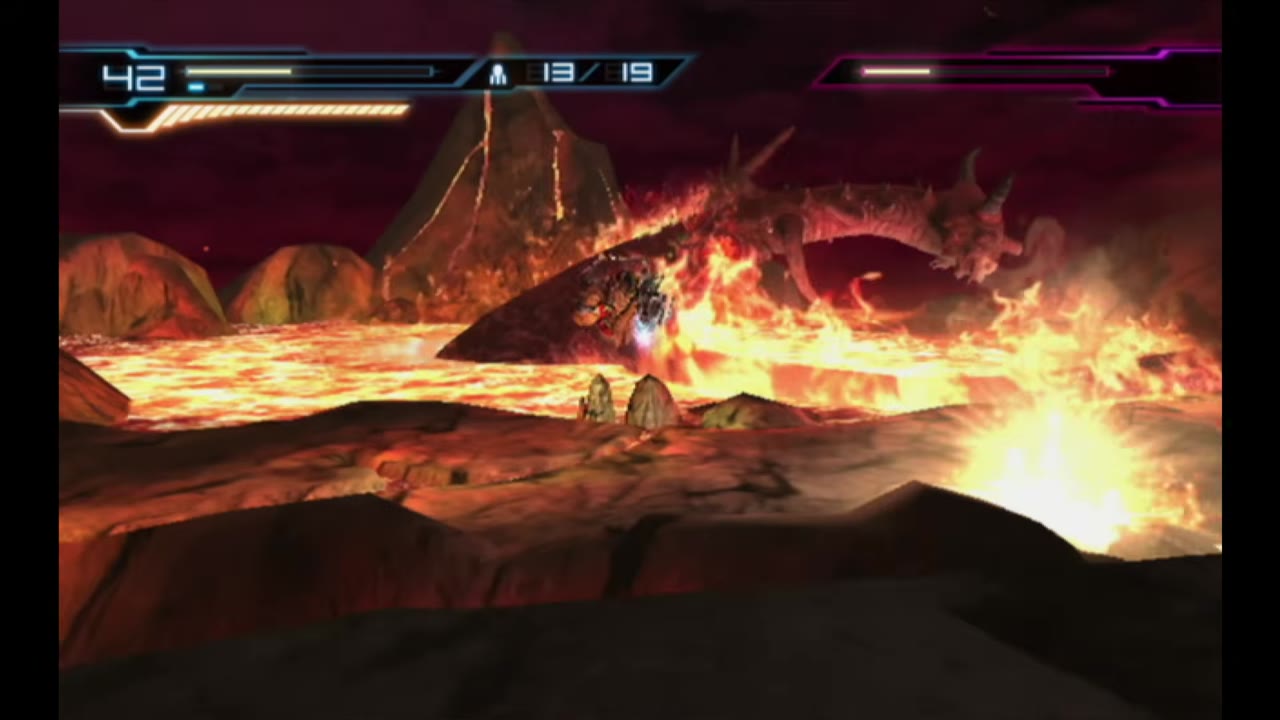
Metroid: Other M is a great-looking game and stands as one of the best-looking games on the Wii. Featuring 16:9 480P anamorphic output, Other M can still look great on today's displays. Samus has loads of detail in her Power Suit, and the game uses motion capture to bring more believability to the animations. Environments are dense, and the themes of forest, volcano, and ice through the three sub-sectors offer distinct feels while exploring them. The use of camouflage for different walls, which can only be deactivated by finding computer terminals, was a neat touch. There is also a great use of darkness to mask things at various points of the playthrough. Each enemy looks unique, and none appear to be lacking in detail or animations. The finishers are incredible spectacles to bring the endorphins! Each beam is also unique, and the fireworks show that evolves from your Diffusion Beam is a particular highlight, even if it can cause momentary frame drops. The cutscenes, however, are a true highlight, even if the dialogue doesn’t always back them up. They are prerendered and allow for higher fidelity than the in-game assets. They don’t vary too widely, though, so it still manages to feel cohesive when the scenes change.
What It Could Have Done Better
I expected to come into Other M and hate most things about it. Instead, I found the game to be far more pleasing than the internet hate gives it credit for. That being said, there are certainly annoyances to be aware of before diving into Other M. The biggest for me is the lousy transition from sideways to upright WiiMote usage. This adds unnecessary complications to gameplay and doesn’t feel great to use during fast-paced battles. Ignoring missiles as much as possible became my norm, despite the added time it takes to bring down enemies. The reason for this control scheme is to make it simpler to play, but that goal is not achieved here. Using a traditional WiiMote and Nunchuck combo would have served the game better, so first-person aiming is more ready to be activated quickly, and giving players access to better analog movement would have certainly been a bonus. A Classic Controller scheme would also have been welcomed for players who don’t care for IR aiming.
The mandatory investigation segments are also highly irritating as they not only stop forward progression, but you often have little idea of what you are supposed to look for. Even if you do know what to look at, the lock-on reticle will sometimes not activate until you pass over the mark several times. These segments could have easily been combined with the cutscenes they trigger to avoid the problem altogether. The occasional forced first-person shooting gallery segments likewise feature some irritating reticle moments that make them feel more luck than skill-based. The last portion of the main game does this, and feeling like your victory rests on RNG is never a great time. Thankfully, these are pretty rare compared to the standard gameplay loop.
The story elements for why Samus’ equipment is blocked from use also should have been addressed sooner to make everything flow together better. The way Adam decides to authorize usage for some abilities late is also a bit awkward from a storytelling perspective. The Varia Suit is the biggest offender here as multiple high heat zones that are mandatory to cross to progress the game are done without it. Why wouldn’t he want Samus not to burn to death when entering the lava areas and authorize Varia Suit usage? I guess the dude was just making a burrito or something instead. I feel like the game does call itself out on this a little when Samus finally reactivates her Space Jump ability. The handling of the Gravity Suit, or lack thereof, was also an interesting choice. The Aura aspect is neat to a degree, but why change an established part of lore for no reason and then never do so again?
Replayability
Metroid: Other M’s replayability is interesting. After beating what you think is the whole game, you are treated to a final chapter to gain the game’s true ending. If you grab every item in the game, you also unlock a hard mode to take on. After the credits, the map screen will reveal every item you missed to make grabbing everything that much easier. Completing the game once also unlocks theater mode, which has the entire game's cutscenes with some prerecorded gameplay footage available for players to watch. The feature takes a little over 2 hours to watch. This is a feature I feel I may use to go back over some of the lore at a later time! A concept art gallery is also available to look at with unlocks based on in-game item collection from what I can tell.
Verdict
I enjoyed most of my time with Metroid: Other M. I enjoyed the story and its exploration of themes like loss and PTSD in someone who seemed unshakable and how resolve can again be restored. Not every design choice worked well, with my biggest frustration coming from its controls. Despite this, I am happy to have finally made the journey through the game and think it is a worthwhile addition to the Metroid franchise as a whole. While maybe not a game for everyone, I think anyone interested in it should go in knowing there are numerous things to like about it!