Metroid for the NES, released in North America in 1987, was a fantastic showcase for what the system could do with its sprawling world. Not owning an NES until 2016, all of my initial memories of playing Metroid come from playing at a friend's house growing up. I never came close to seeing the end of the game, but we did manage to make it to Kraid a few times. When Metroid Prime and Fusion were released, I developed an obsession for the franchise, and unlocking the original Metroid was a nice bonus for completing those titles! It was on GameCube that I finally finished the original Metroid! In the years since, I still go back and revisit Metroid from time to time, but with the release of Metroid Zero Mission, I find myself less drawn to the original version. Thanks to my channel backers, I am finally revisiting Metroid for the first time in five years!
Story
Space Pirates have raided a Galactic Federation science vessel and stolen a new research life form in transit from SR388. The Space Pirates return the creature to their lair on the planet Zebes. The creature known as a Metroid is believed to be the most dangerous organism in the universe and can be easily bred. With enough Metroids, life across the galaxy will be in grave danger. The Federation is not going to let the theft stand and sends in expert Space Hunter, Samus Aran, to eliminate the Space Pirates and any Metroids to maintain peace across the galaxy.
Metroid features a basic prologue and epilogue within the game, and it does an ok job of letting you know what is happening. As with most games of the era, however, Metroid's manual contains an extensive story. The world-building contained within the included words and pictures is incredibly top-notch and one of the best I have ever seen on NES. There are a few localization oddities at times, but Metroid's story remains intriguing even after all these years from its original release.
Gameplay
Metroid plays like an action platformer with a heavy emphasis on exploration. As the entire game spans one giant map, players will revisit areas they have already traversed more than once on their journey. Exploring Zebes is always the greatest source of joy to me when replaying Metroid. Samus has excellent controls with a floaty jump and decent movement speed. Your initial shot range leaves much to be desired, but it doesn’t take long to find upgrades to help with that limitation. Finding new upgrades also opens new paths to explore, further expanding the map!
Beam upgrades in Metroid don’t stack like in later games in the series, and you are limited to only 3 shots on screen at a time. While the long beam never goes away once obtained, players will have to choose between Ice and Wave Beam loadouts. While the extra damage and wall penetration provided by the Wave Beam are nice, the Ice Beam has more practical utility for completing the game. It can freeze enemies to use as a step for higher jumps, and it is the only way to effectively take on Metroids. It can also cause stun lock on most enemies and even Ridley if fired fast enough! Sadly, this means I typically skip the Wave Beam outright.
Metroid sets up the need to search for upgrades right from the start, with the path to move forward blocked and requiring the Morph Ball found just to the left of your initial spawn point. True to its name, the Morph Ball lets players turn Samus into a moving ball to fit under obstacles. The next upgrade players come across is the ability to shoot missiles. Missiles are easy to switch to on the fly with a quick press of the Select button. Samus gets a nice color change to signal the weapon swap, which is handy. The various red doors around the planet can be opened with five missile hits.
Bombs that you can use while in Morph Ball form follow, and many missile expansions are hidden behind paths you can only reveal by bombing them. Bombs have always been one of the more obscure routing tools in the franchise, and the original is no exception since the places you need to bomb to advance the game are not pointed out. Bomb jumping made its debut with the original Metroid title, but thankfully, it isn’t needed to beat the game. It can still be used if you would like to get things out of order, letting skilled players take advantage of the tech.
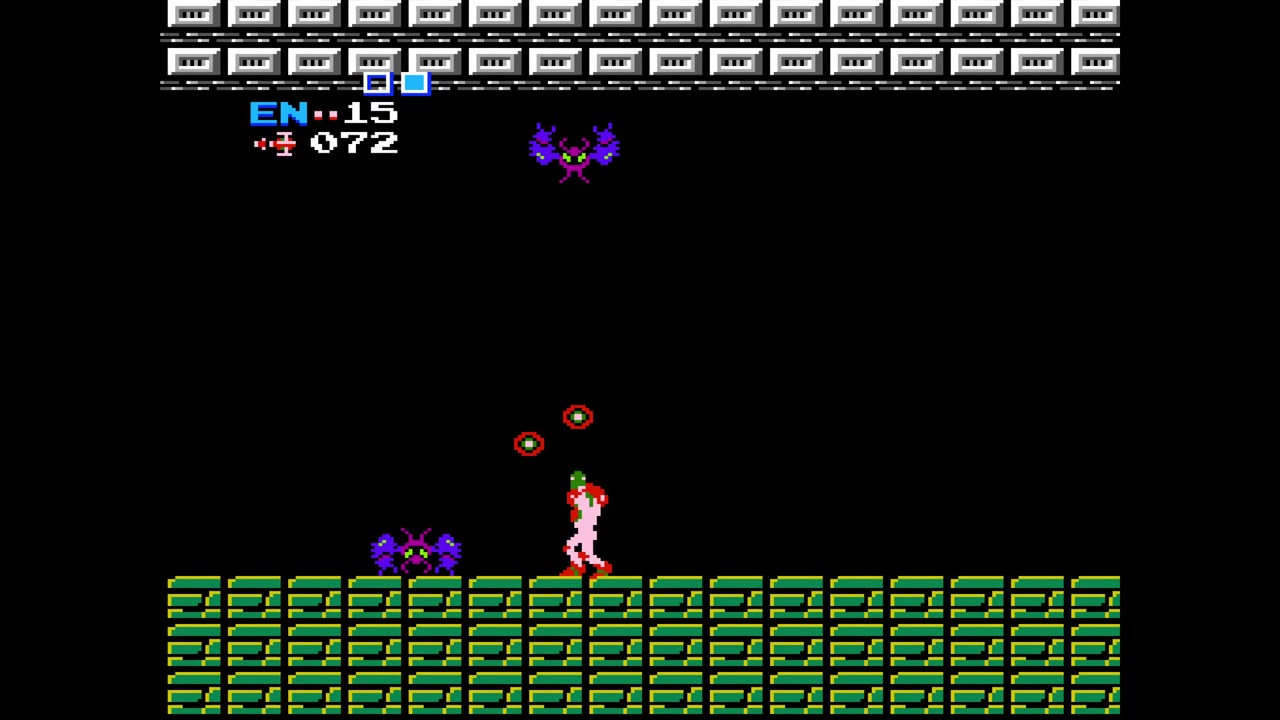
The Screw Attack and Hi Jump Boots are also available and provide further benefits to both movement and offensive abilities. There is nothing more satisfying than entering a room of enemies and launching a perfect Screw Attack to instantly kill them all! Sadly, not all enemies are susceptible to it, but it does grant some invincibility, giving even more utility to use in a pinch. Each room in Metroid has an assortment of enemies to deal with, and the variety is nice. Unfortunately, as you progress through the game, you will notice that different areas reuse the same enemies but with a different skin and more damage output. It’s a mild letdown to see the lack of true distinct enemies, but at least they look different.
Boss fights in Metroid are more sparse than later games, with only Kraid, Ridley, and Mother Brain being present. Each fight presents its own challenge, depending on your current loadout and collected missile and e-tank count. If you have gone through collecting everything possible before attempting the fights, you can tank them without much concern. If you are under-equipped, they can be trickier. Kraid is the one I have the most trouble with on NES, but thankfully, there is a hidden e-tank in the room that you can use as an emergency full heal if needed! If you can get close enough to Ridley to spam Ice Beam shots quickly, he can’t attack, making it a trivial experience even if it does take longer than using missiles. Beating each boss awards you with an extra 75 usable missiles to take into the last area of the game, and you need them!
While the last area of the game is small by comparison, it is harder than any of the others thanks to the speed and damage output from the infestation of Metroids. If a Metroid manages to snare you, your life will drain insanely fast, and it takes multiple bombs to shake them off. Since they usually come in pairs, as soon as you get one off, another is already taking its place if you aren’t careful. Once you make it past the Metroids, you have tons of turrets to deal with while taking on Mother Brain. Victory rewards you with an escape sequence to tackle before the game is finally complete!
Audio
Metroid has an excellent soundtrack that sets a great tone for every area in the game. The shift from the more upbeat tune of Brinstar to those of Norfair, and Kraid and Ridley’s Hideouts is well done. The sense of mystery the music in upgrade rooms provides is almost chill-inducing. Unfortunately, the tunes can become a bit repetitive as you will be exploring these areas for a long time if you are new to the game. The accompanying sound effects, however, are great and add to the overall tone of the game in an excellent way.
Visuals
Being an early NES game, Metroid isn’t as detailed as what would come to the system later. That being said, it isn’t a slouch either. Character and enemy sprites look great in their environments. With the larger size of rooms, the sprites give off a good sense of scale and make the environments feel more real as a result. Environment textures are nice, and each area getting a theme and colors works well. Sadly, there are essentially no backgrounds to speak of throughout the playtime of Metroid. It never negatively impacts the game, but it would have been cool to see the environments pushed even further! Animations likewise are decent for an early NES game, giving a proper sense of movement to everything, and they do look smooth overall. With the number of enemies that can be on screen at a time, you will see instances of flicker from the NES sprite limit. At times, the number of things happening on screen will also cause slowdown during play. Thankfully, these aren’t frequent occurrences.
What It Could Have Done Better
Up till now, I have talked about how much I enjoy exploring Metroid and progressing through the game. Unfortunately, several things make the journey more frustrating when revisiting it today. Starting the game with only 30 health has never made sense to me. Why would an experienced Space Hunter enter enemy territory so close to death? With most enemies causing 5 points of damage at the start of the game, you can take six hits before dying. If you aren’t careful with door animations, you can also take damage while inside them from enemy projectiles or enemies that come through with you. Taking a death will respawn you at the start of whichever area you are currently in, but again, you start back at 30 health. If you used up all of your missiles before dying, those are left empty on a respawn as well. Yes, you can try to farm for more health and missiles, but unless you are at a pipe spawning enemies, that can be a very time-intensive endeavor, especially if you have multiple e-tanks later on. Thankfully, you can farm Metroids for nicer health and missile pickups at the end of the game if need be. The Varia Suit pickup also helps reduce incoming damage and almost eliminates all concern of damage from lava as a result. But still, the lack of starting health has never sat right with me.
Other quality of life issues like the lack of a map in the game are hard to deal with after playing anything post Super Metroid. While Metroid doesn’t have the biggest map in the franchise, it has enough twists and turns that a lack of a proper map is rather annoying. Get out that graph paper like the old days, or hope you have good memory, because many rooms look identical to others, so it is easy to get turned around. Or you could use maps found online if you don’t want to use the old-school methodology. The NES version of the game also featured a password system for continuing progress instead of the save system found in the original Famicom Disk System release in Japan. Passwords are on the longer side and are annoying to enter. At least they did give us access to some fun ways to experience the game. While none of this outright ruins the game, it’s enough to give me pause on replaying the NES game when Zero Mission exists.
Replayability
Once again, the nicest thing about revisiting Metroid comes from exploring its world. While there is an expected order to that exploration, it can be circumvented in many ways, from collecting upgrades first before dealing with bosses or outright sequence breaks depending on the player's skill. Finishing the game also bestows a sort of new game plus playthrough opportunity. Metroid also has around five ending screens you can unlock depending on your time to complete it. Under 10 hours, 5 hours, 2:30 hours, and 57 minutes are your goals! Unfortunately, this review playthrough took me 2:47 minutes, so I just missed one of those milestones! Metroid also has an interesting speedrun that fans should check out if interested.
Other Versions
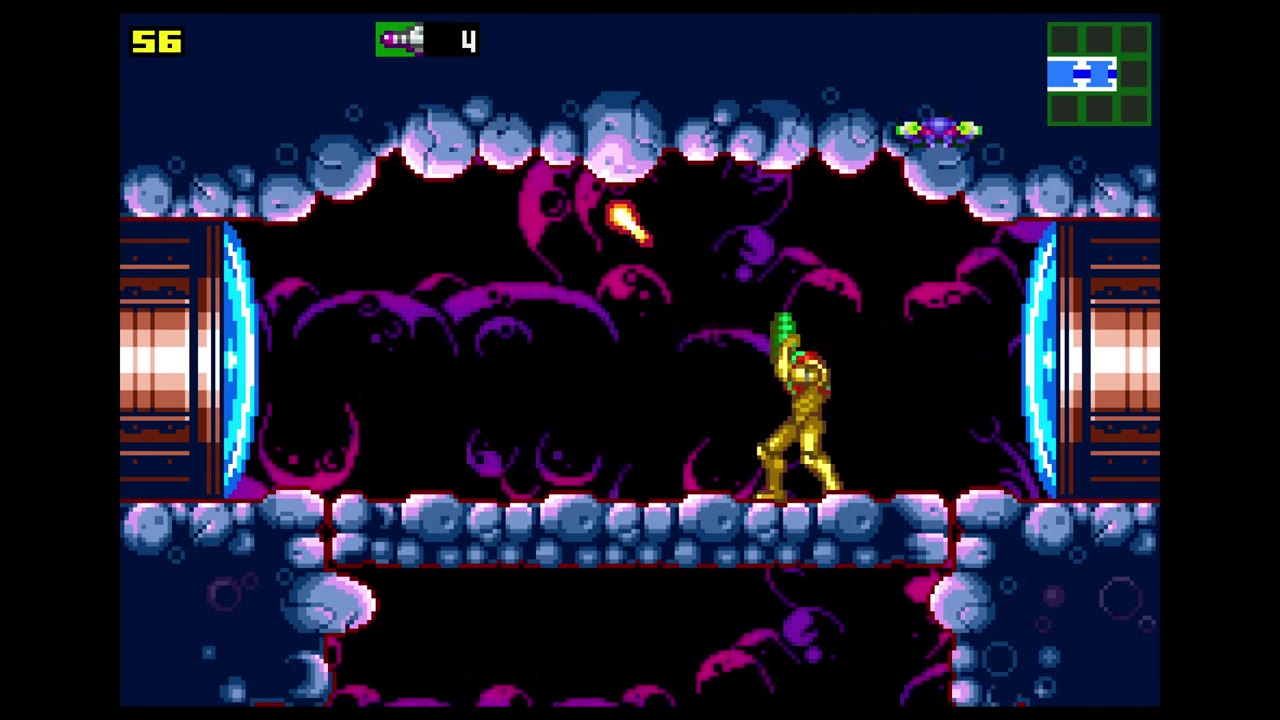
Metroid has had the benefit of multiple rereleases in its lifetime to keep itself available to modern players. Metroid Prime on GameCube has an unlockable version of Metroid when paired with Metroid Fusion. Metroid Zero Mission, a full-blown remake of the original Metroid with expanded gameplay and story elements, is the definitive way to experience the story of the original game, but it has a version of the original game you can unlock. A separate GBA release of Metroid is also available. The Wii, Wii U, and 3DS virtual console services also included it. If you snagged the NES Classic, it also included the game. Now, the game is available on the Nintendo Switch Online NES app.
Verdict
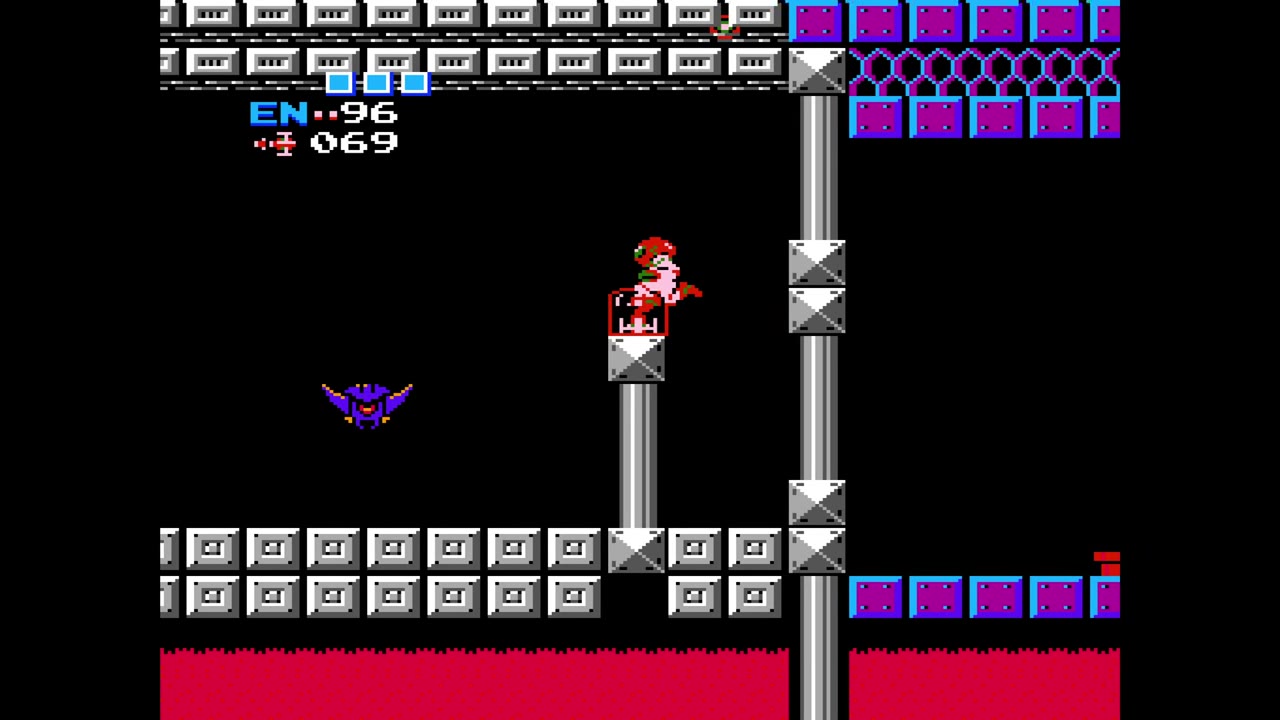
Even after 40 years, I still find Metroid to be a game that players can enjoy with the expectation that it will be difficult and lack some polish found in later games of the series. The biggest issue that Metroid faces from a playing experience is that its remake thoroughly expanded upon the game in every way. While Zero Mission may be the way I enjoy experiencing the game most, the original shouldn’t be ignored and shows that the franchise started with an incredibly strong foundation!