I can easily classify Metroid as one of my top three favorite Nintendo properties. Despite not getting into the franchise until Metroid Fusion for the Game Boy Advance, I have always found it fun to revisit the games I missed and new ones as they were released. Metroid II has remained a notable exception and has been on my to-do list for too long. Something about it has always made it seem more intimidating to dive into. Perhaps because it is a Game Boy game? I can’t say for sure since even its 3DS remake had me pause and never truly dive in. Now that isn’t to say I have never touched the game before, as I often played my friend's copy on our Game Boy. I even picked up the Virtual Console version on my 3DS, hoping to finally conquer it. It never happened, that is, until this review video! After covering the original NES Metroid, my channel backers decided I needed to finally get off my butt and conquer Metroid II. And what a journey it was!
Story
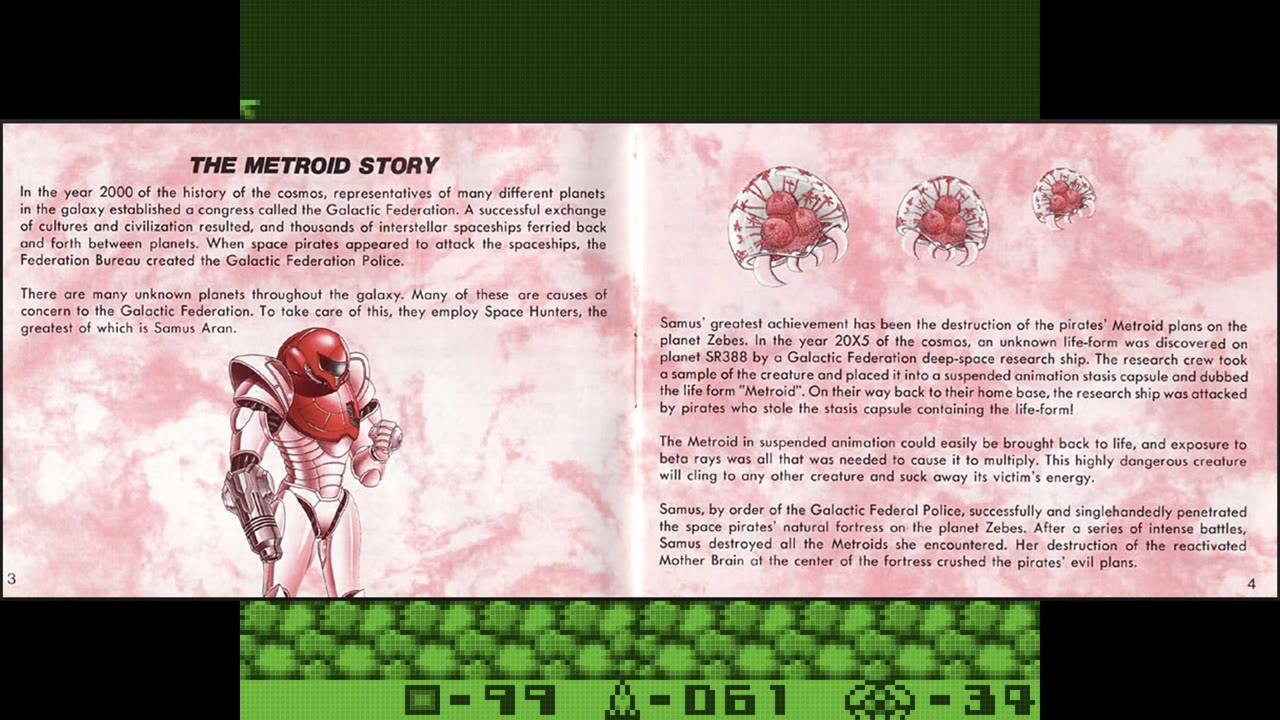
Some time has passed since Samus Aran dealt with the Space Pirate theft of the creature known as a Metroid. With a decisive blow to the Space Pirates and the eradication of their Metroids, the Galactic Federation sends a research team to the planet SR388 to verify if more Metroids exist. Contact with the research team was lost, and a search and rescue team went out to find them. The rescue team likewise went missing. The Federation then sends in a special combat group that loses contact upon hitting the surface of SR388. With so many lost and presumed dead, the Federation once again turns to Samus Aran to resolve the situation. Samus has one objective: eliminate all Metroid lifeforms!
Metroid II doesn’t contain a single frame of story content within its playtime. All story content for the game is contained within the pages of its instruction booklet. This is common for games of the era, but the lack of even a single attract screen with a brief synopsis is unfortunate since many players are not likely to track down the manual for context on what the point of the game is. I suspect those of you who care about playing Metroid II will do so, however. The instruction booklet presents an interesting story and a wealth of other information about the game and its world, so it definitely should not be skipped!
Gameplay
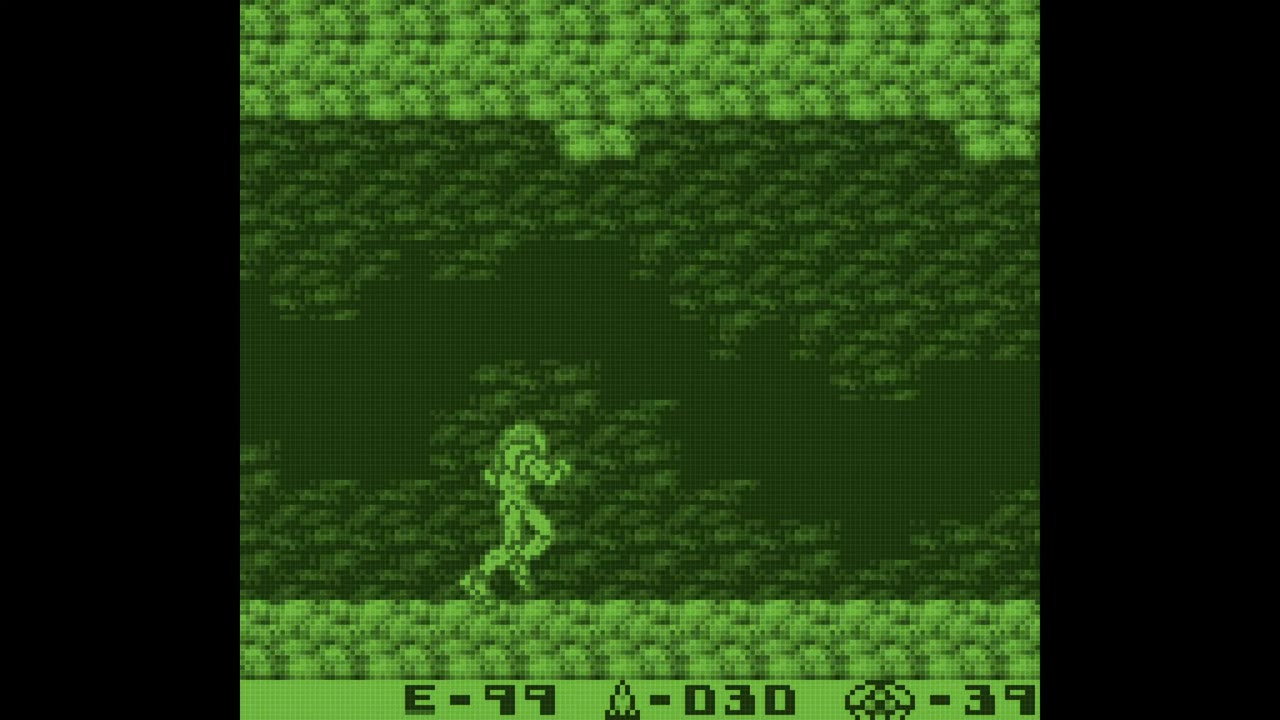
Like its predecessor, Metroid II is an action platformer with a heavy emphasis on exploration. I have a not-always-factual belief that Game Boy games based on other console properties will be a smaller experience. For Metroid II, this could not be further from the truth. The game expands upon the foundation of the NES original in every way, delivering a full-blown Metroid experience that could be argued to be the true blueprint the rest of the series has followed since.
SR388 is a much larger world than the Zebes contained within Metroid on NES. The map is broken up into multiple areas that players need to thoroughly explore for Metroids and various upgrades to help on their journey. The first couple of areas are fairly linear, but mid-game gets confusing with the routes you will need to take to progress. The last segments of the game return to a more linear style, but the large rooms you need to navigate with the added verticality still make it feel harder overall.
To further make routing both easier and difficult, certain paths will remain closed to you by deadly pools of lava or acid, I really can’t tell which, until you defeat a certain number of Metroids. Or at least I assume the number of Metroids killed opens up the paths, as they occur after Metroid battles. This is nice as it keeps you within the area you need to be until you have everything you need and have killed every last Metroid. On the flipside, remembering where those blocked paths were isn’t always easy thanks to the lack of an in-game map. Sometimes you may not even notice they were there in the first place. I have accidentally stumbled into these new routes on more than one occasion during my review playthroughs.
While exploration remains a personal element of the fun in Metroid II, it would not have been as great without all of the new abilities at Samus’ disposal. When starting the game, Samus has access to the Morph Ball. Navigating narrow and hidden paths becomes available quickly with the bomb upgrade. Bomb jumps are again available but are not needed thanks to the inclusion of the Spider Ball power that lets Samus climb every surface in the game with a quick press of down while in ball form. Later on, you gain the Spring Ball powerup that lets you jump while in Morph Ball form to reach higher ledges you can then Spider Ball onto. Vertical exploration becomes even more accessible thanks to the return of the High Jump Boots and is accompanied by the first franchise appearance of the Space Jump, which essentially lets you fly with proper timing! Between these new upgrades and some bomb paths being more clearly marked, you can explore SR388 with ease!
Combat is an interesting point to discuss in Metroid II, however. Being on Game Boy, there are several limitations at play when it comes to the hardware. The first being that there are generally fewer enemies to deal with as you explore the world of SR388. There are still some, but most can easily be avoided if desired. Instead, environmental obstacles play a bigger part in the threat of SR388. Later rooms in the game are filled with spikes, and navigating them is treacherous. On an interesting note, Metroid II lets Samus jump again after taking damage, so sometimes hitting one of those spike traps can help you get where you want to be. The second is that once you move off-screen, the enemies will stop moving. This can come in handy when dealing with Metroids, but will likely not play into dealing with standard enemies.
If you insist on killing everything in sight, Samus has some quality of life improvements at her disposal if you are coming right from the NES game, such as being able to crouch and shoot at enemies on the ground! You can also aim down while falling now to shoot things beneath you! Yes, it sounds silly to be excited about these features since they became franchise standards after Metroid II, but I have been playing a lot of Metroid on NES lately. Beams still don’t stack like later games in the series, but the three-shot Spazer and devastating Plasma beam make their debut and further add to your arsenal. You can switch between beams at any time by collecting them again. The Screw Attack returns and when combined with the Space Jump makes you a devastating killing machine against the normal enemies scattered around SR388.
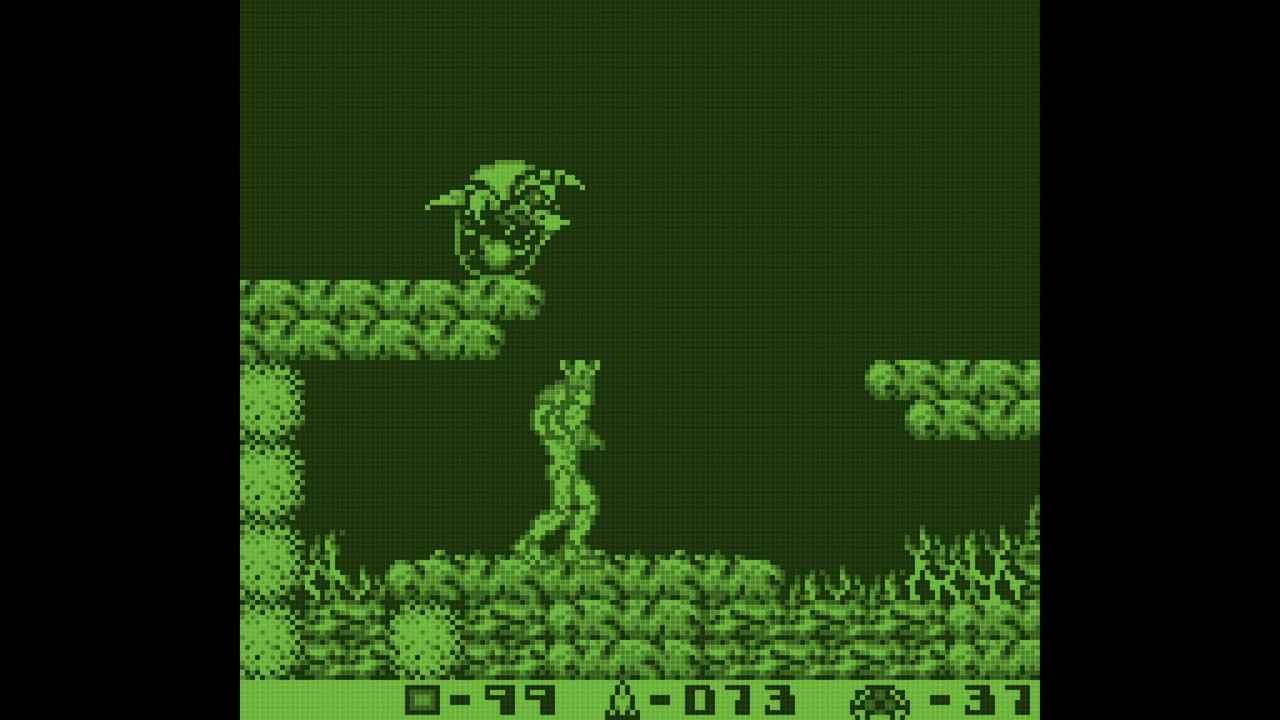
Missiles also play a huge role in your Metroid II journey as they are the only way to open certain doors and effectively take down the Metroid threat. Numerous missile expansions are scattered around SR388 to give you a huge arsenal to work with, and you will need them! Each Metroid encounter throughout the game is essentially a boss fight. The Alpha Metroid you meet in the beginning will take around 5 missiles to defeat. As you progress, the higher-tier Gamma Metroids take 10 to bring down. Even further into the game, Zeta and Omega Metroids will task you with lining up 20 or more missile hits before they succumb! And of course, the Standard Metroids that litter the end area of the game need to be brought down with a combination of Ice Beam and missiles. Interestingly, there is one boss fight in Metroid II that isn’t a typical Metroid, but that one is better dealt with using bombs.
Each fight will essentially play out the same, with each Metroid variant trying to ram itself into you to deal major damage. As the Metroid forms progress, they add new attacks to their arsenal, with Gamma having an electric arc that spins out from them and Zeta and Omega launching fireballs. Thankfully, Samus starts with a full 99 energy life bar in this game, with an additional 5 energy tanks of health that can be gathered to extend her life further. The Varia Suit also helps reduce incoming damage, making it an essential find for success! If you are ever running low on supplies, returning to Samus’ ship you can find a full heal and missile recharge. There are other places around SR388 where you can find these restoration items, so always remember the last place you saw one if you are in a pinch! If you do happen to die, you will have to restart from your last save point and redo everything from your last save. I am so glad that Metroid II includes a save system!
While the final few Zeta and Omega Metroids can be rough, they pale in comparison to the Queen Metroid, who is the game's final boss. She strikes at you with insane speed compared to the rest of the game's enemies and has a huge pool of health. Her mouth is her only weakness, and it can take a while to realize how to effectively take her down. Funny enough, the room this boss fight takes place in has a convenient retreat option for you to Morph Ball into so you can go and heal and recharge on missiles if needed. Taking the Queen down feels amazing given how much more difficult she is, and the game lets you bask in it a bit since it doesn’t have a timed escape sequence in the traditional sense. You still have to navigate back to your ship after the fight with, spoiler alert, a baby Metroid, but there is no rush in the journey.
Audio
While I have enjoyed most aspects of Metroid II, its audio work is not a high point of the franchise. The default beam and jump effects grow tiresome quickly, and the buzzer-type sound when you get hit is grating. At least the low health buzzer was drastically tuned down, so that's a plus. The Ice beam and Screw Attack top my effect list. Music is ok for a Game Boy game, but nothing popped out as particularly memorable. The best part of the experience is when the music was more ambient noise than actual tunes, as it helped to make the exploration of SR388 feel more ominous. Sadly, I could play through the entire game without audio and not feel like I was missing out on much.
Visuals
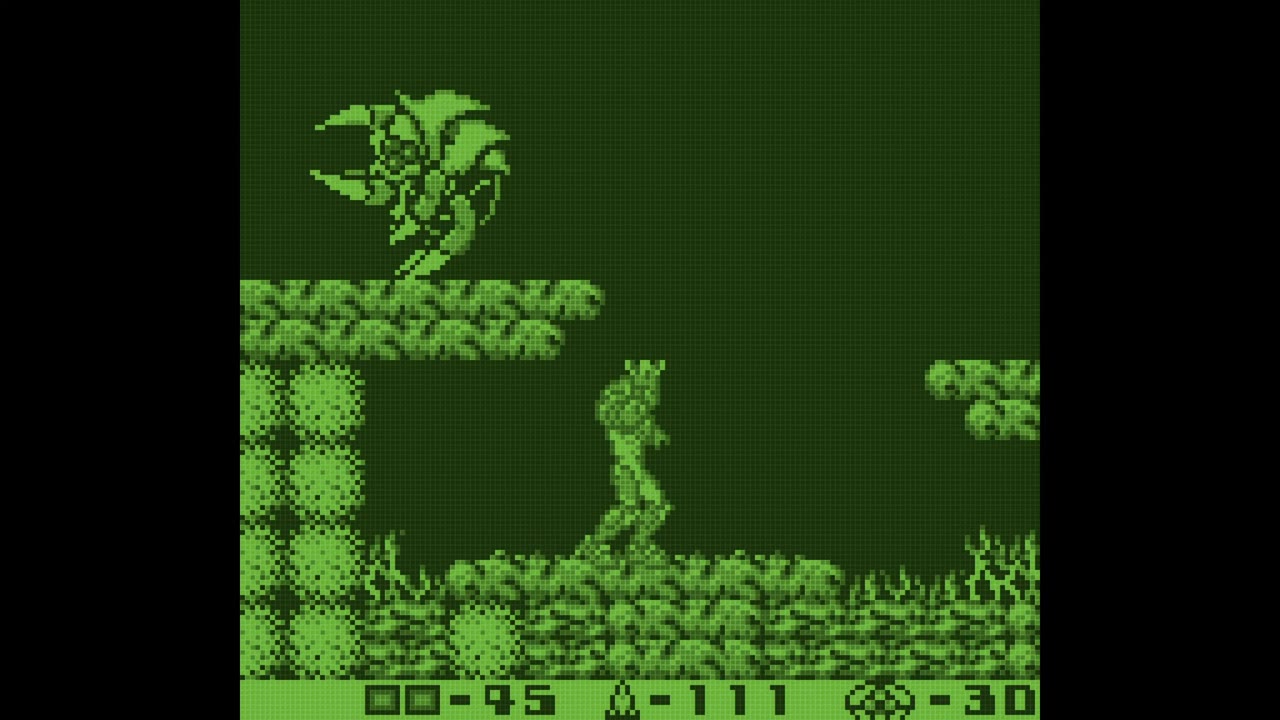
Metroid II is great to look at as you play, despite being limited to four shades of green on an original Game Boy system. Samus gets her iconic Varia Suit look that would become the franchise standard moving forward, thanks to Game Boy palette limitations. Sprites and environments look great, and the level of detail is fantastic. The ruined Chozo statue under the Metroid Queen's lair is also exceptionally haunting. Backgrounds are still mostly non-existent, but when there are details, it looks great. Animations are smooth, and the entire game runs without a hitch. Even sprite limitations are kept to a minimum. Due to the size of the Game Boy screen, environments aren't as large per scene as other games in the franchise, and Samus takes up a considerable amount of screen real estate. It never caused issues for me during play, but it makes SR388 feel smaller as a result, despite its larger map size.
What It Could Have Done Better
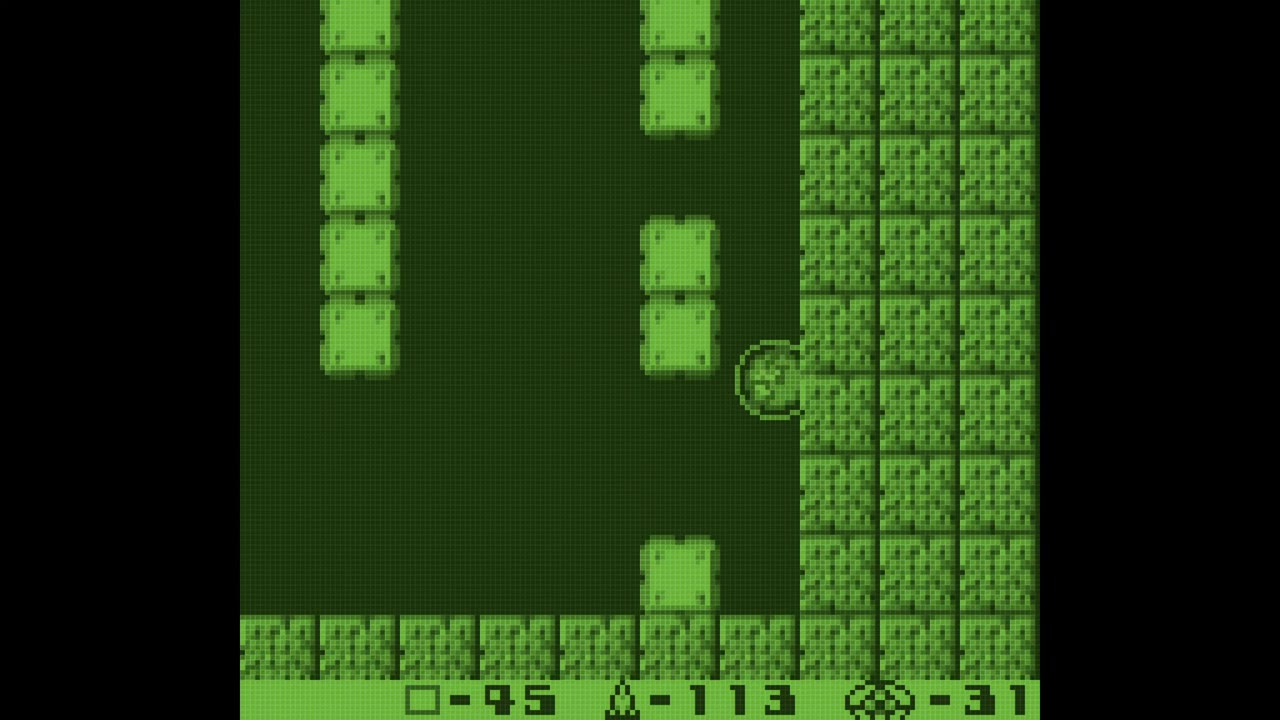
My biggest beef with Metroid II is just its lack of a map. It isn’t as easy to make your own map with this game, and due to the way the game was made, sometimes navigation doesn’t make the most sense. As I said earlier, I stumbled into where I needed to go a few too many times. Due to technical limitations, the world can also feel emptier at times compared to other Metroid titles. This can both hurt and help with the overall atmosphere, though. Thanks to another Game Boy limitation, the difficulty can also be cheesed regularly, making many Metroid fights a non-issue. The lack of any in-game context for what you are doing is also strange, but that comes from being a 1991 Game Boy game.
Replayability
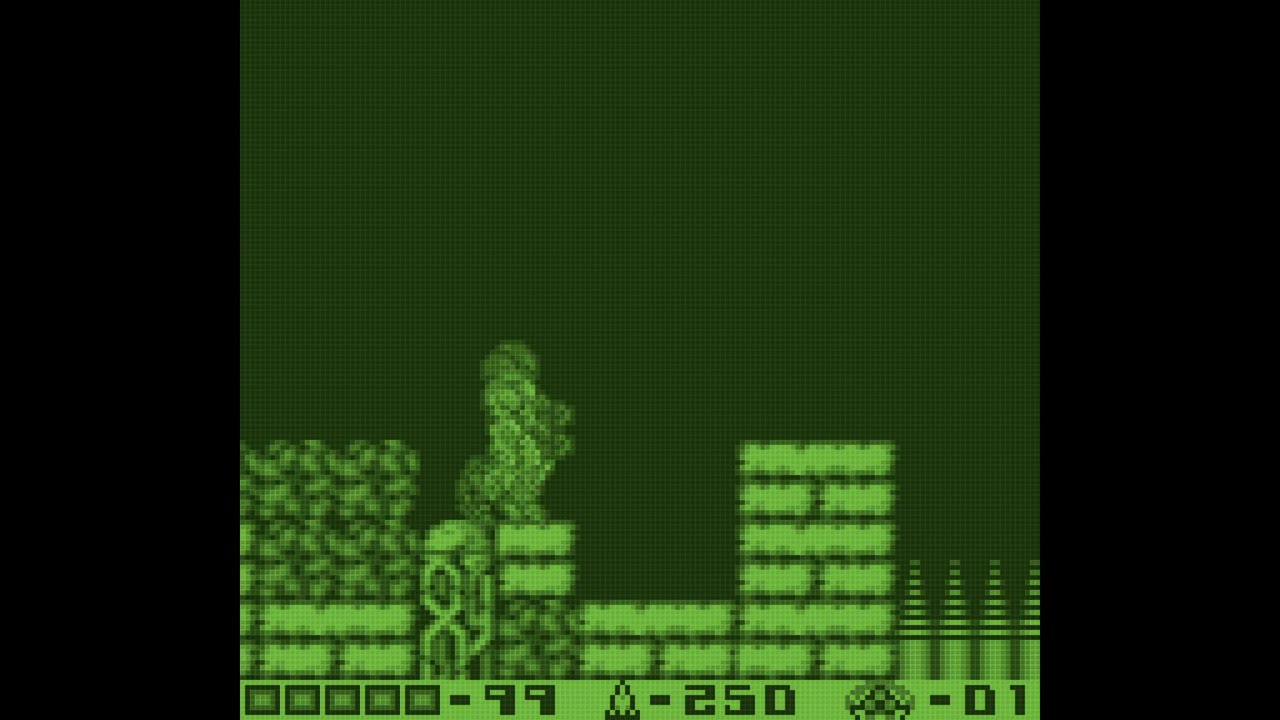
Like other Metroid games, the replay value for Metroid II comes from trying to beat it under certain time goals. 9 hours, 5 hours, and 3 hours are the milestones for this game, making it far more manageable than the original NES game. By using the provided save points, you can map out the next segment of your playthrough and then reload to do it faster to help you achieve that lower time! Or just look up a map on the internet to begin with.
Other Versions
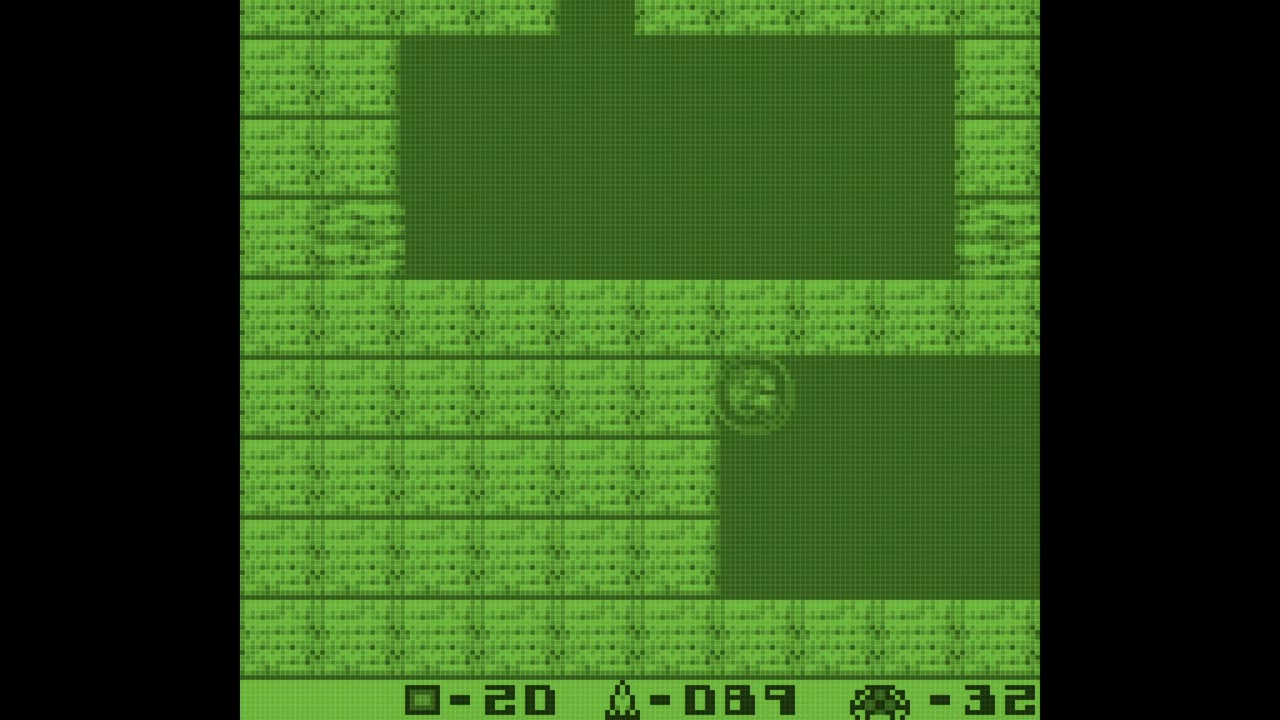
With this being a Metroid title, I am honestly shocked at how few times it has been rereleased since its original launch. The first time the game was made available again on modern platforms was with the Virtual Console release on 3DS in November 2011. Numerous fan remakes and colorization patches of the original game have appeared over the years, with the most notable being 2016's AM2R. I don’t normally cover such releases in this segment, but it is so well done that leaving it out is a disservice. An official remake appeared on 3DS in 2017 with Metroid: Samus Returns. This version includes new 2.5D visuals, music, and gameplay, including a map! I don’t know why I skipped this version at launch, but one day I hope to finally play it. As of making this video, the easiest way to get access to the original version of Metroid II is through the Nintendo Switch Online Game Boy app.
Verdict
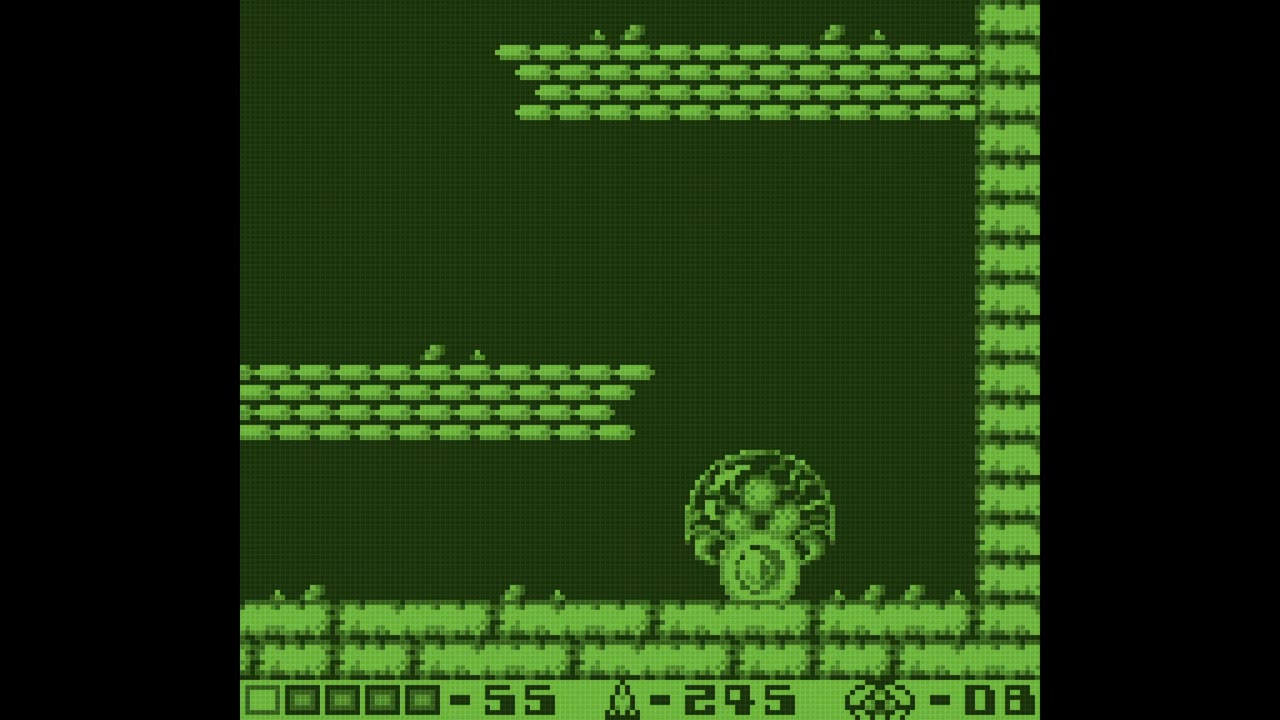
I enjoyed my playthrough of Metroid II as I worked on this review, and I am excited to say that I have finally beaten it. While it may not stand up there with my favorite Metroid title, it is an incredibly solid game and one that used its platform to its fullest. Many of the concepts introduced in Metroid II would later be used in all Metroid titles, making it incredibly important to understanding the origins of the franchise. While playing the original Game Boy release may not be for everyone, if you are a fan of the series, you should try it at least once. Or, there are those remakes that might better fit your play styles!