Mega Man is a well-known and regarded franchise that spans many genres. It is crazy to think that the franchise started on the NES nearly 40 years ago, in December 1987. Not only was Mega Man the first game in the franchise, but it was also the first game Capcom released specifically for consoles instead of being an arcade port. Since our family had jumped from an Atari 2600 to a Super Nintendo, I only played Mega Man at a friend's house growing up. We would swap turns on levels and eventually reach the end stages, where the infamous Yellow Devil would destroy us. I never finished the game until it was released on GameCube as part of the Mega Man Anniversary Collection. This week, my backers wanted me to revisit the game, and it is great to see how well it still holds up!
Story
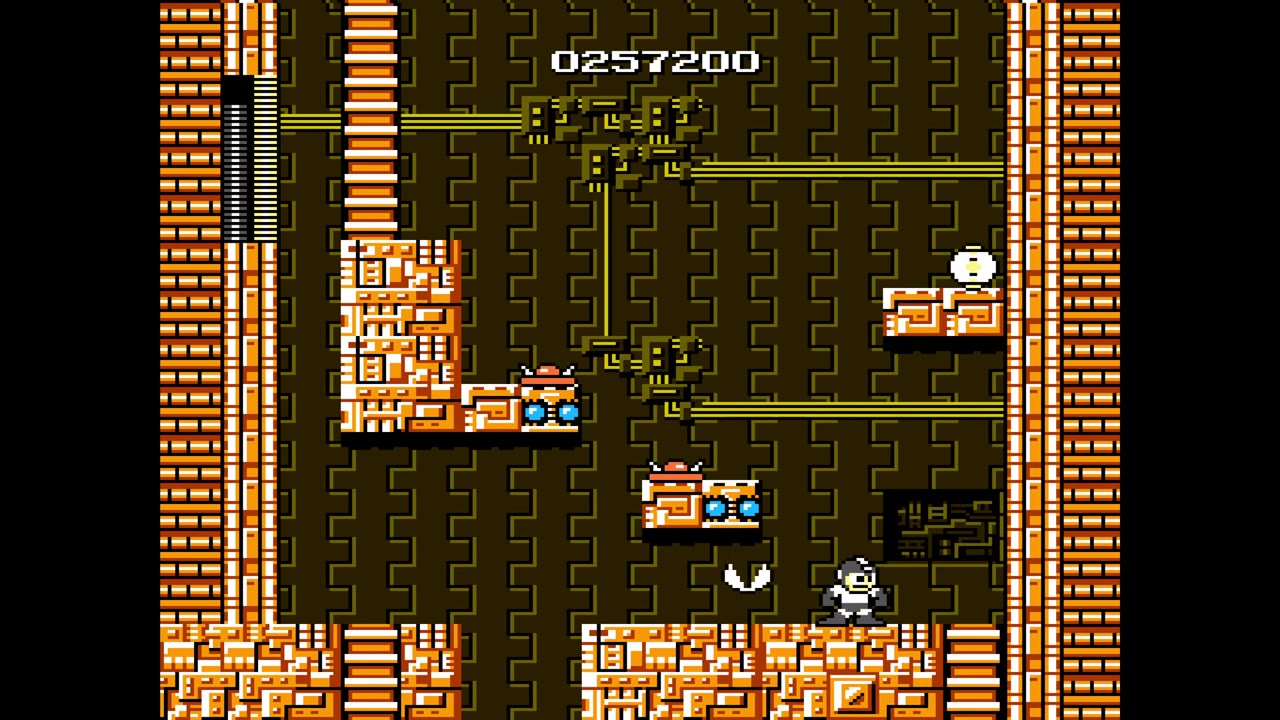
The year is 20XX, and Robots that help out humanity are a normal sight. Designed by Dr. Thomas Light, these robots have brought prosperity to the planet. Then one day, robots began to attack humanity. Dr. Albert W. Wily, an old associate of Lights, has reprogrammed six of the most advanced robots in existence, Robot Masters, to help him take over the planet. Seeing the devastation being unleashed, Rock, one of Dr. Light’s personal helper robots, undergoes reprogramming to become combat-capable. Now Mega Man must defeat the Robot Masters and stop Dr. Wily’s evil scheme.
Like most games of the era, a majority of the story elements for Mega Man are given to players through the included instruction booklet. An epilogue is presented to players upon completing the game, but otherwise no story content is available within the game's runtime. Unfortunately, the localization for Mega Man in North America is horrendous with liberties taken with the original Japanese plot. While the basic overall premise remains the same, small things like the game being set in Monsteropolis are as odd as the North American cover art. Regardless, the story is serviceable and gives proper motivation for the events of the game.
Gameplay
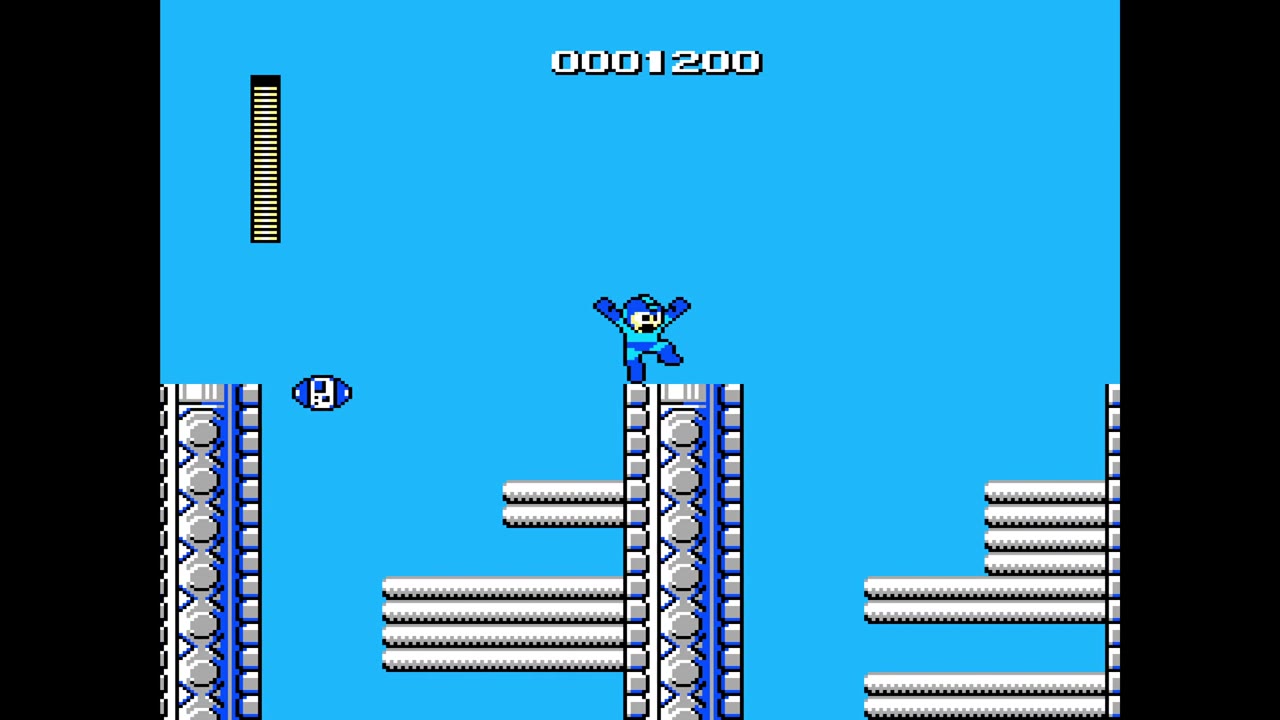
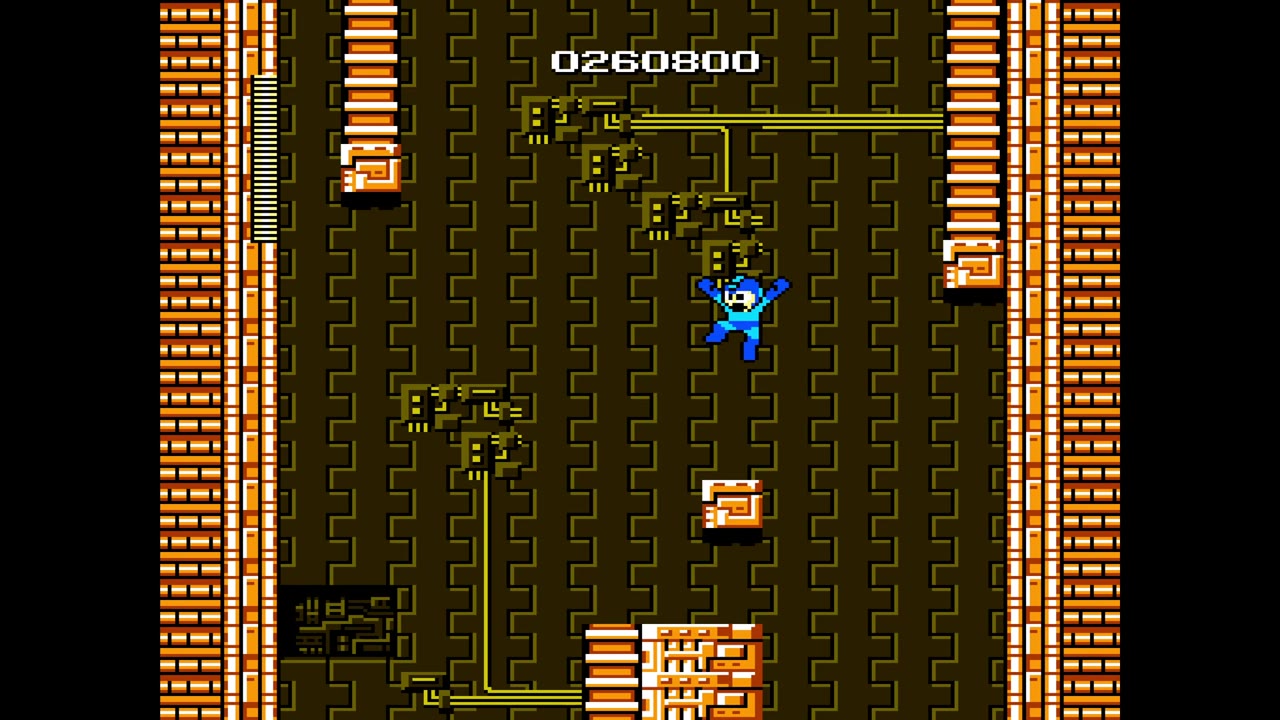
Mega Man is a nonlinear action platformer that lets players tackle the six included levels in any order desired. Each stage has a unique theme tied to the Robot Master. Bomb Man is in a demolition zone with explosive enemies and snipers found throughout. Elec Man is in a power plant with loads of verticality and electrical obstacles to navigate. Fire Man has fire hazards, and flaming enemies drop down on players. Guts Man resides in a construction zone, and players have to navigate dangerous conveyors, death drops, and fight off robot workers. Ice Man is set in an icy environment with slippery floors, water segments, flying penguins, and disappearing blocks. Unfortunately, Cut Man being a timber cutting robot isn’t as nicely represented, but a few scissor traps are present to tie the theme together. Each level offering different challenges and playing experiences helps the game feel fresh even 40 years on from its original release.
Navigating each level is where I find the most joy in replaying Mega Man. Controls are simple thanks to the NES’ two-button controller. The D-pad moves Mega Man, who responds instantly to any input. A allows you to jump and B to shoot. There is no sliding ability or charged shots in this game, allowing you to focus on the basics. Shots can be fired from your Buster quickly but only three of your shots are allowed on screen at a time. Enemies have varying HP values, and none feel like bullet sponges. Mega Man has a good jump distance with excellent precision, which is used in almost every level to get over some obstacles. To further enhance mobility, players will eventually claim the Magnet Beam. The Magnet Beam creates walkable platforms that you can use to overcome some of the game's more egregious pits, claim various items, or use as a shortcut through other platforming segments.
While levels can be played in any order, some are easier than others. Fire Man, Bomb Man, or Cut Man are my go to choices on a new playthrough. Each level has a midway checkpoint you will respawn at after a death. Reaching the final boss door grants another checkpoint so you are closer to the final boss. Unlike all future games in the series, the boss corridors in Mega Man contain more enemies or obstacles to deal with. Once you successfully traverse the corridor, your showdown with the chosen Robot Master begins! The Robot Masters found within Mega Man aren’t incredibly difficult but they do require you to memorize attack patterns or behaviors to overcome them. After defeating a Robot Master, you are granted their weapon to use for the rest of the playthrough. This further ties into the strategy of level selection, as each Robot Master is weak to another's weapon! While each Robot Master can be defeated with Mega Man’s Buster, the weakness weapons make the fights much easier for players of any skill level.
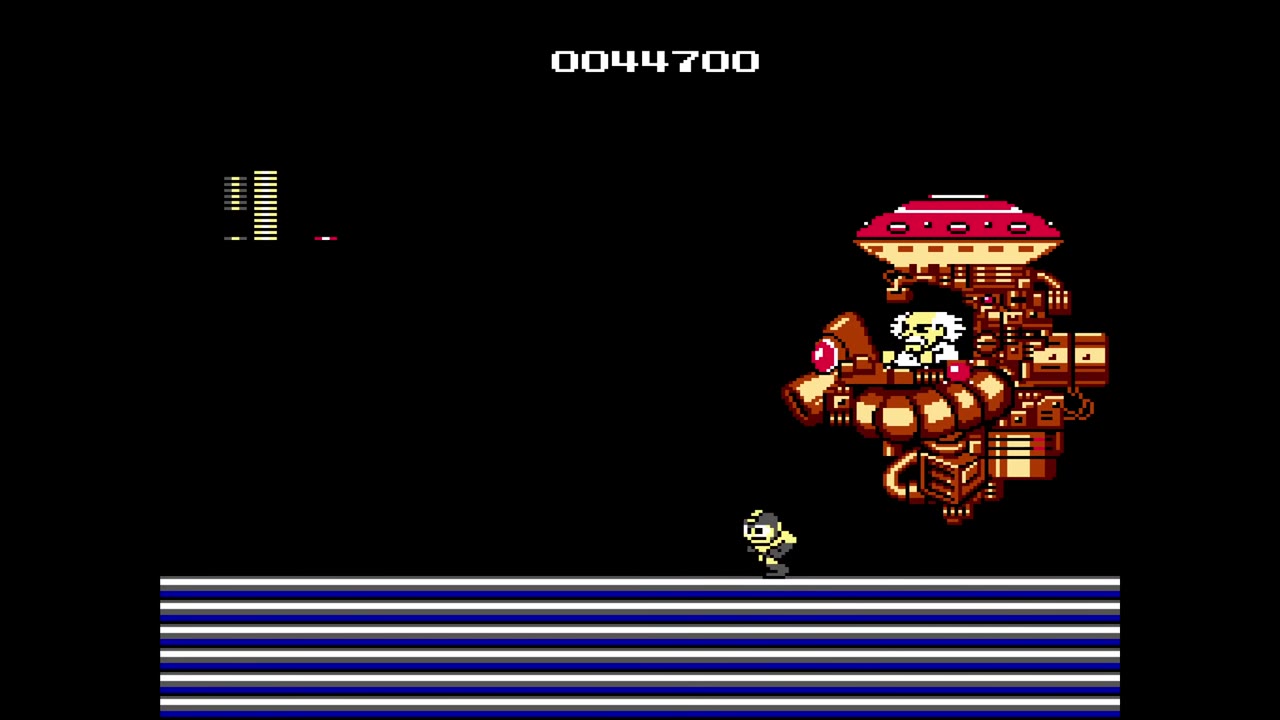
After defeating the six Robot Masters, Dr. Wily makes his appearance with four additional levels. The difficulty spikes during the Wily Stages, with harder levels and bosses to overcome. The Yellow Devil is the first of these boss fights and one that has again brought destruction to me many times over. While it utilizes a single pattern for its movements, making it easy to learn, its speed still causes me trouble to this day. A couple of Robot Master rematches and a clone of Mega Man are next, followed by a series of deadly bubbles. Once defeated, the remaining four Robot Masters want their rematch before you take on Wily himself. Wily’s machine still follows typical patterns you are required to learn to win but it deals a lot of damage if you make a mistake. There are no life upgrades or E Tanks in this title, so making mistakes bears a heavy price. If you find yourself constantly failing, there is a glitch present in the game that can deal infinite damage to every enemy. While this is certainly cheating, it can help anyone get through the game with ease.
Audio
Mega Man has one of my all-time favorite 8-bit soundtracks! Every level has a dedicated theme, and they all sound awesome. Elec Man and Cut Man are my personal favorites. Sound effects are crisp and fit the tone of the game well. Combining the music with the sound effects gives players a near-perfect audio experience! At times, sound effects might be skipped, but it isn’t a deal-breaking occurrence.
Visuals
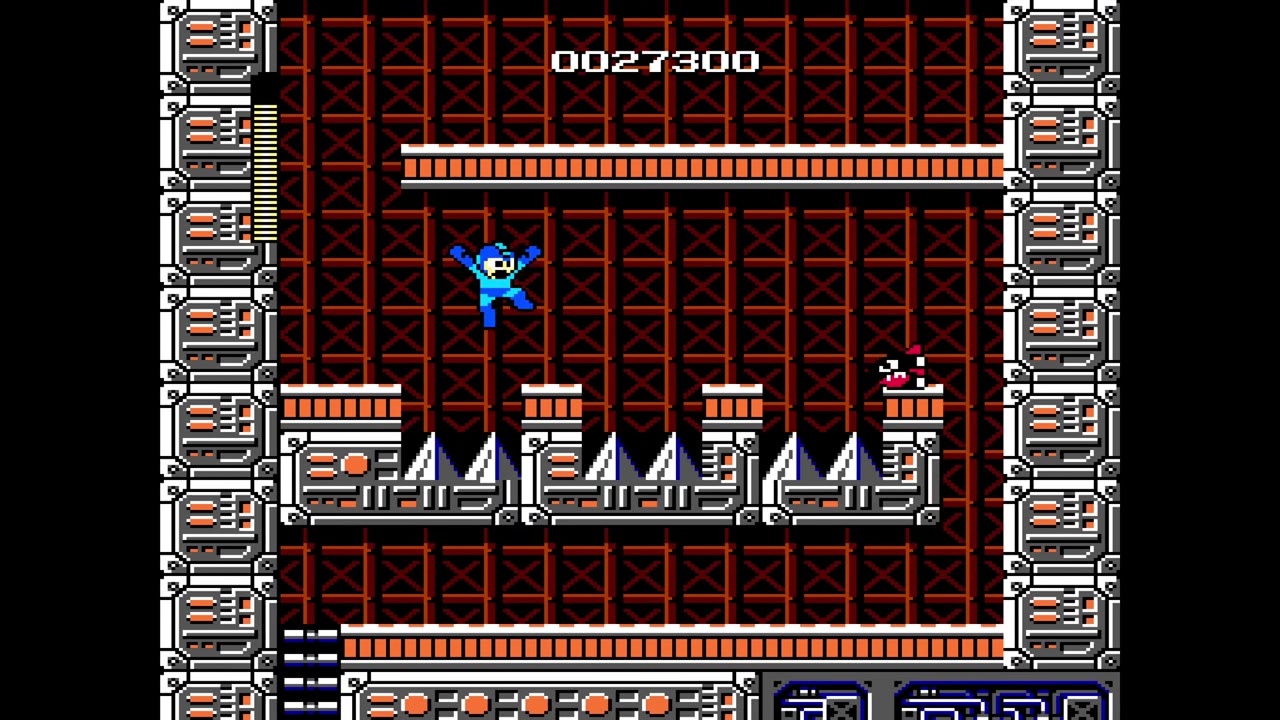
Mega Man’s 8-bit visuals can only be described today as iconic. Mega Man has well-detailed sprites for Mega Man and the Robot Masters. Enemies found throughout each level also have good levels of detail. The size of the Yellow Devil and Wily’s Machine also imposes a satisfying sense of dread compared to the rest of the game's smaller enemies. Environments are pleasing with detailed maps and backgrounds. Some levels have lower background details but it works within the confines of the specific levels. Animations are decent with good walking, firing, and enemy animations. Wily’s eyebrows and bowing in defeat also made their debut with the start of the franchise! Because of how much can be happening on the screen at once, Mega Man will have significant sprite flicker occurring at various points in a playthrough due to NES hardware limitations.
What It Could Have Done Better
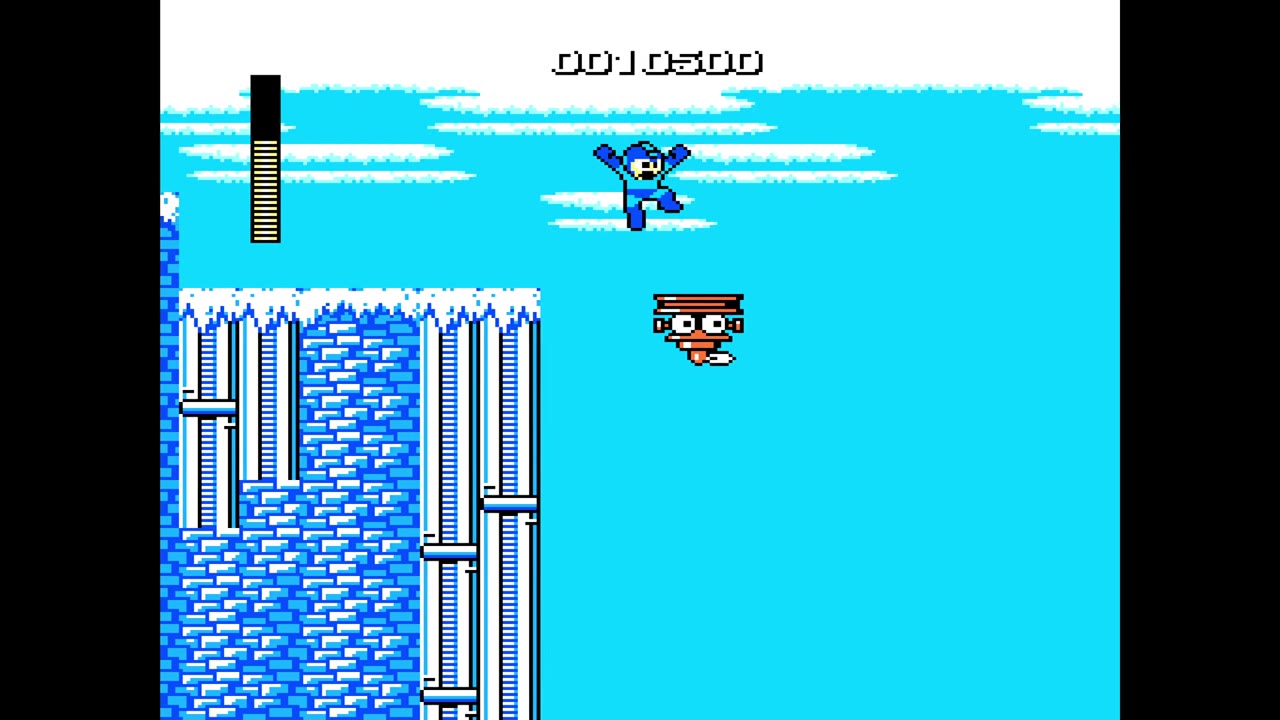
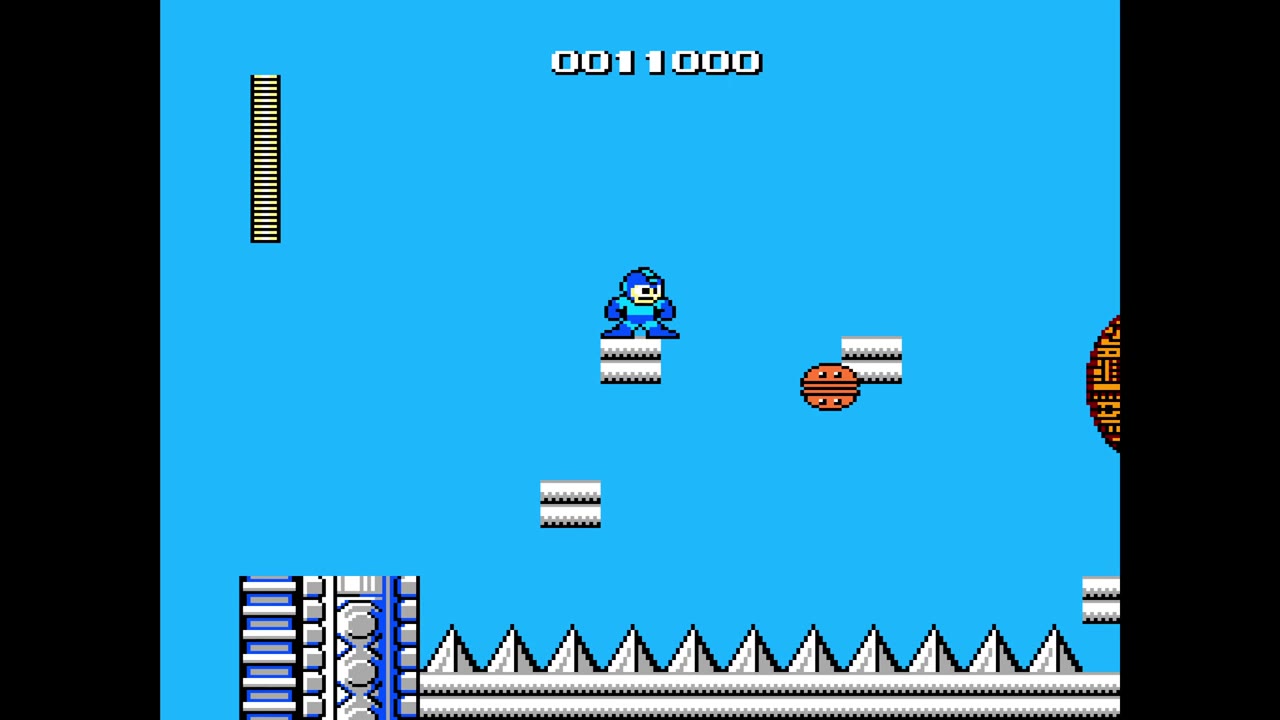
While I have little issues with most of the playtime found within Mega Man, there are things I truly dislike upon revisiting it. Ice Man’s stage is the biggest offender. The level starts fine enough, but halfway through, you are introduced to the Yokai Blocks, disappearing tiles that you need to navigate to proceed through the stage. While not problematic themselves, the section immediately following them is navigating several gun platforms over a bottomless pit. If you get hit by one of the other platforms, you will be thrown to your death by the game's ridiculous knockback feature. I hate knockback. At times, jumping to the next platform as it is descending and firing will have you drop straight through your intended target because you are damaged.
In my most recent playthrough, I was standing on a platform as it got close to a wall, which again caused Mega Man to fall through it and die. If you manage to make it past the first stage of platforms, flying penguins begin to spawn, and if you don’t eliminate them quickly, they can come up underneath you and again make you fall to your death. Did I mention that the platforms don’t always line up right and you can be stuck on one for a long time dodging shots? Well, that happens too. Every time you die you get sent back to redo the Yokai Blocks, so overall just an obnoxiously bad segment in an otherwise solid game. Thankfully, if you are playing in boss weakness order, you should have the Magnet Beam so you can easily skip over the whole annoying segment.
The difficulty spike during the Wily segments also takes some getting used to. While the entire game is about pattern memorization, the speed of some bosses, like the Yellow Devil, might make it hard for some. Unfortunately, the only way to overcome this is to either git gud, or cheat. Enemy drops can also be frustrating at times, as the main item they will drop is score balls. Score is such a pointless metric in Mega Man that it was removed in all subsequent games. Health, weapons, or extra lives can also drop, but the odds are not in your favor.
Replayability
Unfortunately, replayability for Mega Man is rather low. While the Robot Masters remain some of the most iconic, the Mega Man formula was better perfected with later games in the franchise. The only reason to revisit the game on its own merits is to take on its difficulty, which is lacking in some of the later games. You can also do score attacks against other players to make the metric a little less pointless. Learning how to take on each boss fight with only the Buster is another potential challenge!
Other Versions
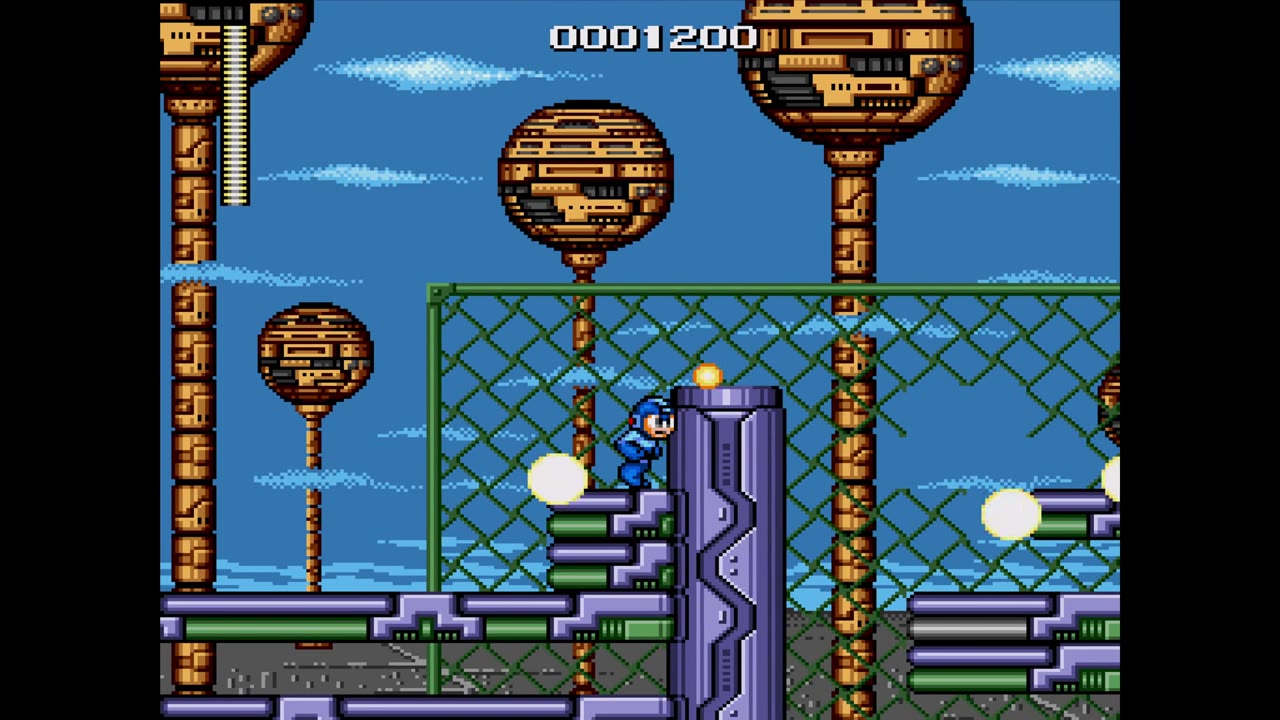
While Mega Man was first released in 1987, it has seen numerous remakes and rereleases since. In 1994, the first three Mega Man titles were remade for the Sega Genesis as Mega Man: The Wily Wars. While the North American version of this game was exclusive to the Sega Channel, Retro-Bit Publishing was able to finally give it a proper licensed physical release! In Japan, Mega Man was rereleased on the Sony PlayStation with updated music and a hint system added. In 2004, the original 8 Mega Man titles were compiled into the Mega Man Anniversary Collection for GameCube and PS2. Xbox followed in 2005. Various phone ports were released throughout the late 2000s. In 2006, a full remake of the game was released for the PSP, dubbed Mega Man Powered Up. This version includes 3D visuals, redone levels, more story content, and much more. Emulated versions for the Wii, 3DS, and Wii U Virtual Consoles followed in 2007, 2012, and 2013 respectively. In 2015, the first six NES Mega Man games were again bundled and sold as the Mega Man Legacy Collection Volume 1 for 3DS, PC, PS4, and Xbox One. Switch ports arrived in 2018. Various emulation platforms and services have included the game as well.
Verdict
Mega Man may not have been the most successful game in the franchise, but it holds up well and provided a solid foundation to build from. While it likely won’t be a game many players call their favorite, I think it should still be experienced at least once. Even today, going back and revisiting the game is still a challenge, and I always enjoy seeing how much of the franchise's DNA started with this original Mega Man game!