Growing up, I enjoyed playing arcade-style racing games like Mario Kart, Episode 1 Racer, and San Francisco Rush. More realistic sims like Gran Turismo or Sega GT 2002 didn’t quite resonate with me, despite putting many hours into the latter. When Need For Speed: Underground was released in 2003, it looked like the perfect arcade racer, and one that featured real-world cars I was interested in. I had briefly tried its predecessor, Need For Speed: Hot Pursuit II, and wasn’t a fan of how it felt to play, so I had some concerns about blowing my cash on Underground. But the Fast and Furious bug had infected our friend group hard, so I was willing to take the risk to play some illegal street races! I have loved the game since and enjoy occasional revisits to play through the whole game and often use it for my various tutorials. Though the game may be considered overhyped today, after 20 years, there is a reason we still talk about it!
Story
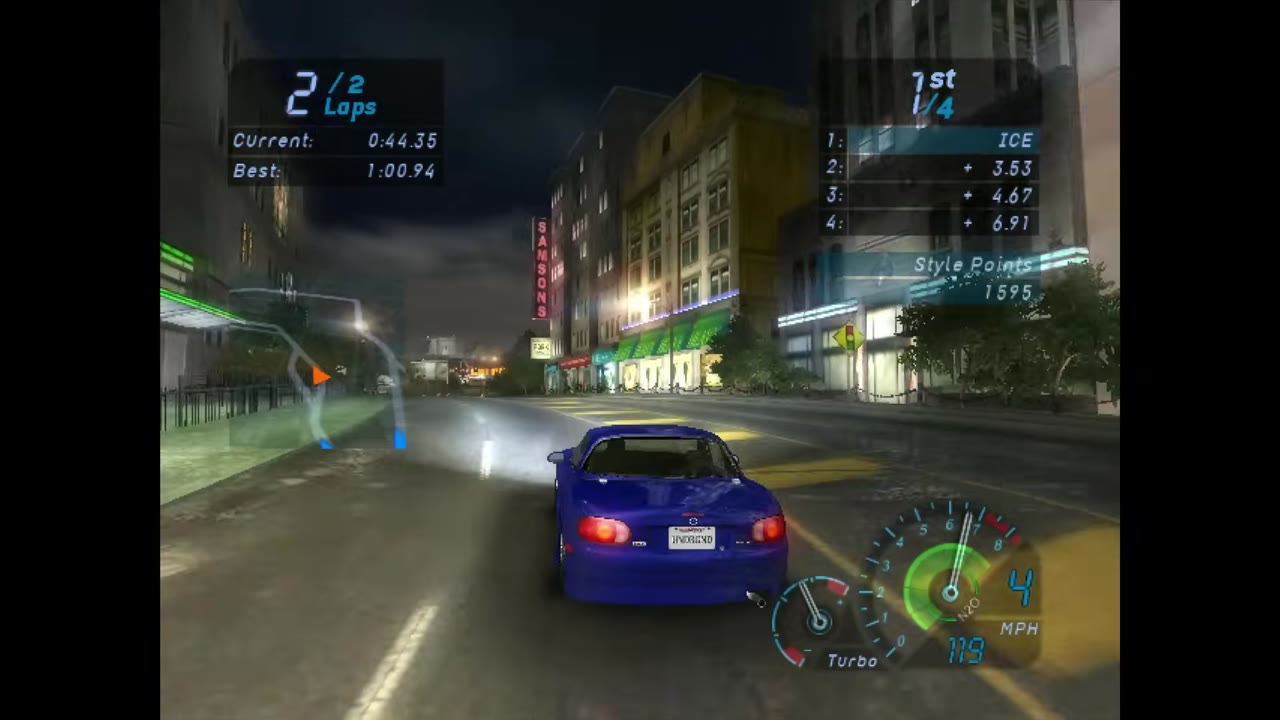
Olympic City has a thriving street racing culture, one that seems to go unnoticed or unrestricted by the local police force. Every night, racers take to the streets to build their reputations and climb leaderboards. As a new racer in the city, you must prove you have what it takes to race with the best!
Need for Speed: Underground was the first game in the franchise to offer players a storyline to be a part of. The story is told through the use of in-game messages that precede each event and in-game cutscenes that happen after set events. Cutscenes are fully voiced, while pre-race messages are not. While the story isn’t anything memorable, it can help keep players invested or be skipped if desired.
Gameplay
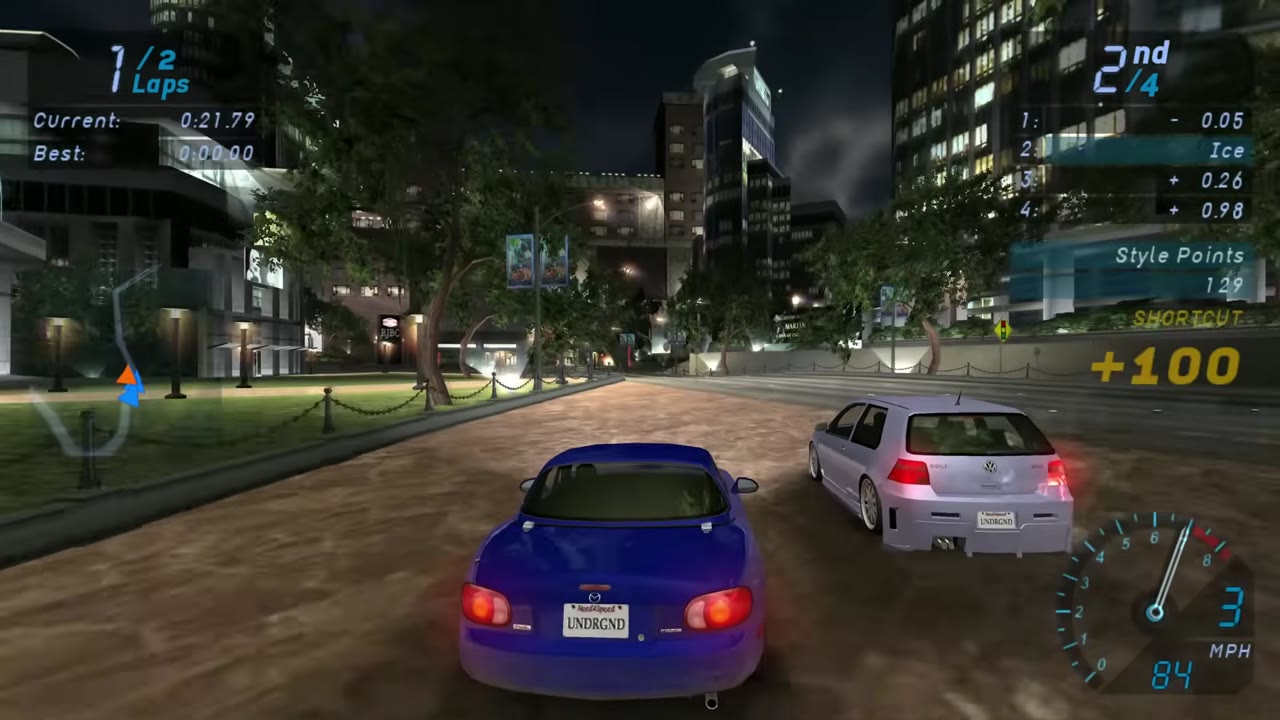
As the game begins, you are given a taste of what mildly upgraded cars feel like to drive before being busted down to a stock car you start your career with. With your selected car, it is up to you to take on the other racers of Olympic City across five different race types. Circuit is your basic race type where you complete a set number of laps, usually three, but it can go as high as six. Lap Knock Out is similar to Circuit, but with a twist where the racer in last place gets eliminated at the start of a new lap. Sprint does away with laps and instead has you going from point A to point B. Drag Racing has you doing your fastest quarter mile possible, while Drift pushes your car handling to the test to rack up points. Tournament modes for each event type are featured throughout the game for you to master, with scores based on your placement in the individual races. At the end of each event, you will earn money based on your chosen difficulty. The event types offer a good variety during a playthrough and can cater to a wide variety of racing tastes.
Numerous tracks are included with standard and reverse variants. It is not as diverse as other racing games of the time, with constant revisits to the same tracks, which has often been a point of criticism. I feel that Underground does a good job of using what it has. You will often find familiar landmarks or turns throughout a race that you have seen in other tracks; only this time, you need to go right instead of straight. It gives you a sense that this is your stomping ground. It becomes familiar and, over time, nostalgic or painful if you dislike a certain aspect of the course. While it is indeed limited in track numbers, I have never found this to be a mark against the game. Drag races use their own maps, with a unique feel for each, be it utilizing off-ramps or jumping a train at the finish line. Drift is set within a reconfigurable parking structure and offers a unique experience across each track.
It is the controls, however, that make Underground such a joy to play. In Circuit, Lap Knockout, Sprint, and Drift, you are treated to responsive controls and fun arcade handling that will have you breezing through courses within minutes. NOS is a key component of Underground and can be used at any point outside of Drift tracks with the simple press of a button. You only have a limited supply, so saving it for key turns can be a game-changer. Automatic and Manual Transmission options can be selected to have more managed control over acceleration or top speed. You can adjust stability control in the options to further refine the feel of your turns if you want more slide or grip. Both are essential to getting the highest Drift scores possible!
Drag Racing introduces a different set of controls with a focus on landing a perfect shift to achieve the fastest speeds possible. As a Drag Race starts, you need to hold your acceleration at the perfect spot to get off the line as fast as possible. Each gear after needs to be shifted into when your indicator turns green. Push the engine too hard, and it will explode! Shift too early, and you will lose out on valuable speed. NOS will again play an important part in your success, and managing it for quicker shifts or a final burst of speed is a heavy part of its strategizing. Steering is simplified to a simple right or left movement, with your car sticking to an available lane. Traffic, while a factor in every event besides Drift, is another obstacle to contend with that can end your Drag events with a wrecked car requiring a race restart.
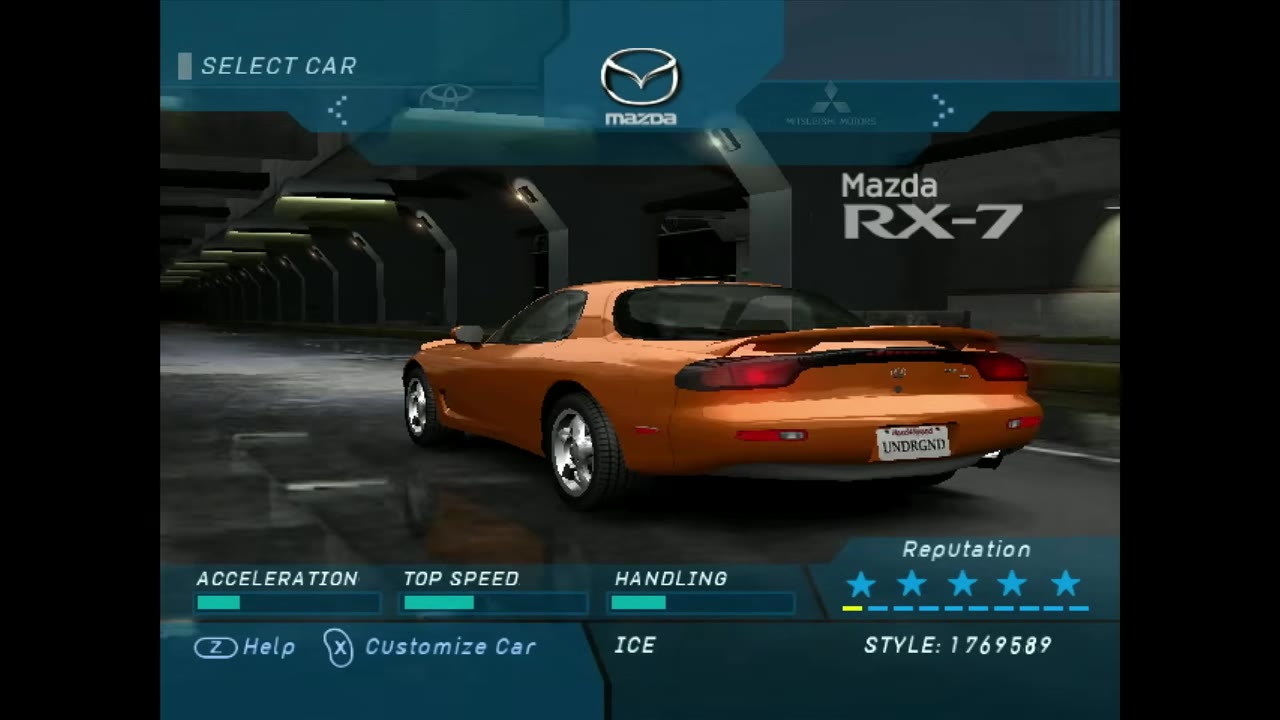
As you progress through the game and climb the leaderboards in each event, you will unlock new cars and upgrades to spend your money on. In total, Underground features 20 different licensed cars from various manufacturers. Each car is completely customizable, and there are tons of options to choose from. Body kits, tires, rims, paints, vinyl, lights, neon, window tints, and decals are all included. Unique visual upgrades are unlocked throughout the story to add even more variety. Vinyl, in particular, is where you can find limitless customization, with multiple layers available in both style and color. As you race, you earn style points by doing various tasks, like being close to traffic or having a clean section, which will unlock more visual upgrades as you accrue them. By doing more customization with higher tier parts, you increase your multiplier for style points to help you unlock new options faster. By hitting certain visual or progression requirements, your car will be featured on magazine covers which I find incredibly fun!
While most of the customization options are purely visual, you do unlock performance upgrades as you proceed through the game. These upgrade options are presented to the player as kits that you install in your ride and feature the names of various part manufacturers. These choices are nothing more than an illusion, as each kit gives your car the same upgraded stats regardless of what is chosen. Unique performance upgrades are offered for the player to choose from after certain events that can change things up more dramatically, as you only get to pick one. You can select between different upgrade tiers as you need them throughout the game, which can particularly help in Drift events. A nice feature in Underground is that when you trade out your car for another one, every performance and visual upgrade you have spent time customizing is automatically applied to the new car! A garage system to hold multiple cars with unique looks is sorely missed, but I appreciate not having to redo everything.
While the Undergound mode is the main experience of Need for Speed: Underground, the game does feature a Quick Race mode where you can pick any of the game's vehicles, unlocked custom liveries, or your Underground mode car and enjoy any of the game's event types at your leisure across any unlocked track. Quick Race also offers a free run mode for you to practice any track without a lap limit or opposing racers. A two-player split-screen mode is also available on the console versions of the game to enjoy racing against a friend. On the PS2 and PC versions of the game, online play was supported back in the day, and thanks to custom servers, both can still be played online today!
Audio
Audio work is a key element of Need for Speed: Underground. Starting with its soundtrack, you are immediately immersed in the cultural feel of the era. There are over 26 licensed tracks used in Underground, from Rap to Rock, that get you pumped to race. To this day, I am still a fan of multiple artists who I first heard in Underground. Cars sound authentic with engine sounds and effects that bring every facet of your car to your attention. Firing your NOS is about the most iconic sound effect you can get! Every version of the game features surround sound support to further enhance the immersion of other racers closing on your tail.
Visuals
Olympic City itself plays a huge part in the feel of Underground with its variety of locales. You can see inspiration from cities like Seatle or San Fransisco and others in its track design. The game always takes place at night, with wet streets and loads of atmospheric lighting. The cars are well-modeled for the player and opposing racers, while generic traffic looks a bit blander. Reflections are utilized on cars and puddles to varying degrees depending on the system on which the game is played. Blur effects and light trails are also present, but again, they vary in intensity depending on the version being played. I have always found the GameCube version to have the best mixture of each visual feature. Each version conveys an excellent sense of speed, and the effect gets enhanced while using NOS.
The Xbox and GameCube versions of the game feature progressive scan support for a crisper 480P output, while the PS2 version is sadly limited to 480i. PC players, however, can take advantage of much higher resolutions while in a race and, thanks to mods, widescreen support. Depending on the system, frame rates can also vary. On a modern PC, or more powerful period-accurate PC, the game achieves a practically flawless 60 FPS output for incredibly smooth gameplay. Xbox players are treated to a locked 60 FPS in menus and 30 while racing. On GameCube, the frame rate is unlocked with fluctuating dips into the low to mid-20s when other opposing racers are on the screen and jumping back up to 30 and sometimes higher when you are alone. The PS2 version is similar to Xbox with menus having a 60 FPS frame rate and races being capped at 30 but it has instances of dropping to 20 in heavier scenes.
What It Could Have Done Better
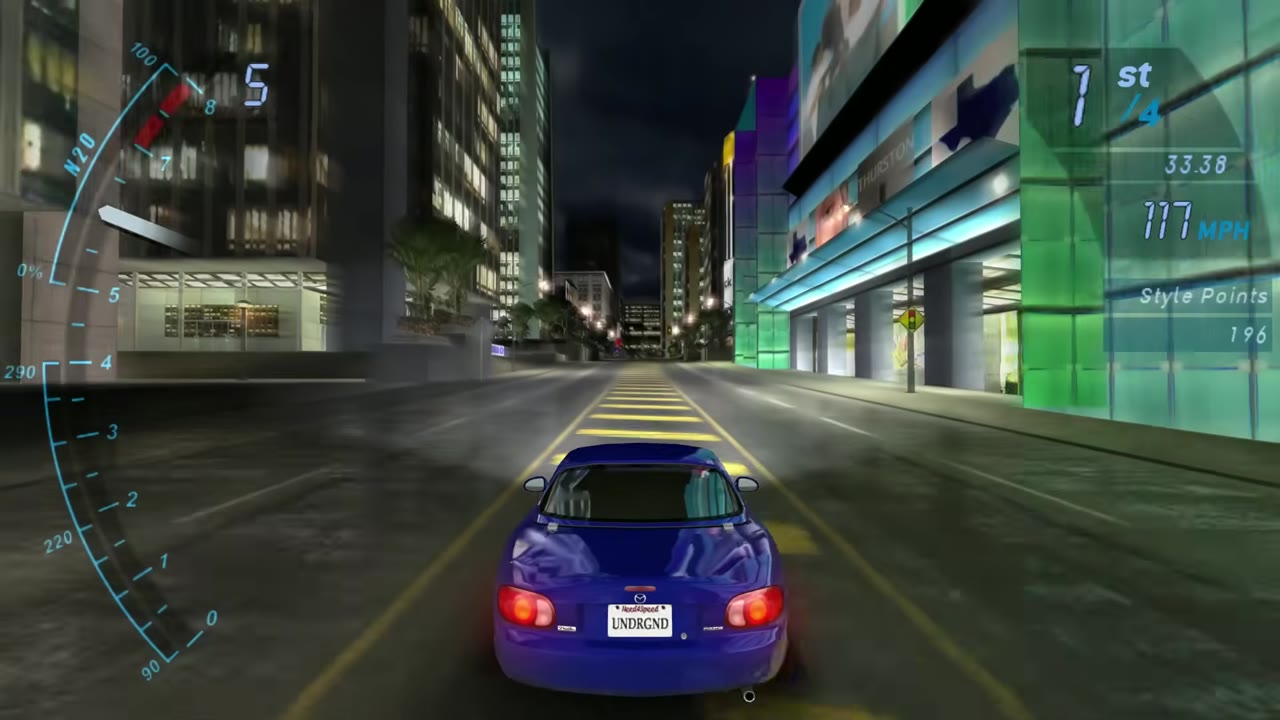
The biggest issue when visiting Need for Speed: Underground today is all of its best selling points have been expanded and enhanced for its sequel Need for Speed: Underground 2. Despite this, I still prefer the original, thanks to its use of a menu and quicker access to content. The lack of police chases could also be seen as a negative if you found those to be a main draw from other entries in the franchise.
But there are still things about the game to be aware of that may hamper your experience. First off, the game makes heavy use of a rubber band mechanic. I know the point of this mechanic is to keep races more interesting, but too many times over too many years, I have been cheated out of a victory at the finish line. It isn’t as bad as other implementations, but it's still annoying when it messes with you. At least if you wreck an opponent, there is a strong chance they won’t recover, though.
Another issue is that various corners you think you can cut close to a wall will instead wreck you with invisible geometry. For more quality of life improvements, I wish that the game auto disabled stability control when playing Drift. I hated drift for 20 years until I finally learned the impact this option has on it combined with manual transmission. Now, I no longer dread them coming up in my race menu. It also would have been cool if the various upgrade kits affected your cars differently, depending on the brands included.
If you want to play the game on a console, the Xbox version is the clear choice for performance, visuals, and controls. GameCube comes second thanks to solid controls and less blurring, but is hurt by fluctuating frame rates. The PS2 version is far blurrier and has lower performance in many areas. The DualShock 2 also lacks the precision required for Drag Racing. This version of the game implemented additional throttle controls on the right analog stick to compensate, but it has never felt as good as using Xbox or GameCube triggers. With third-party controllers like the Retro Fighters Defender, this issue can be resolved and have it feeling like the other versions.
Replayability
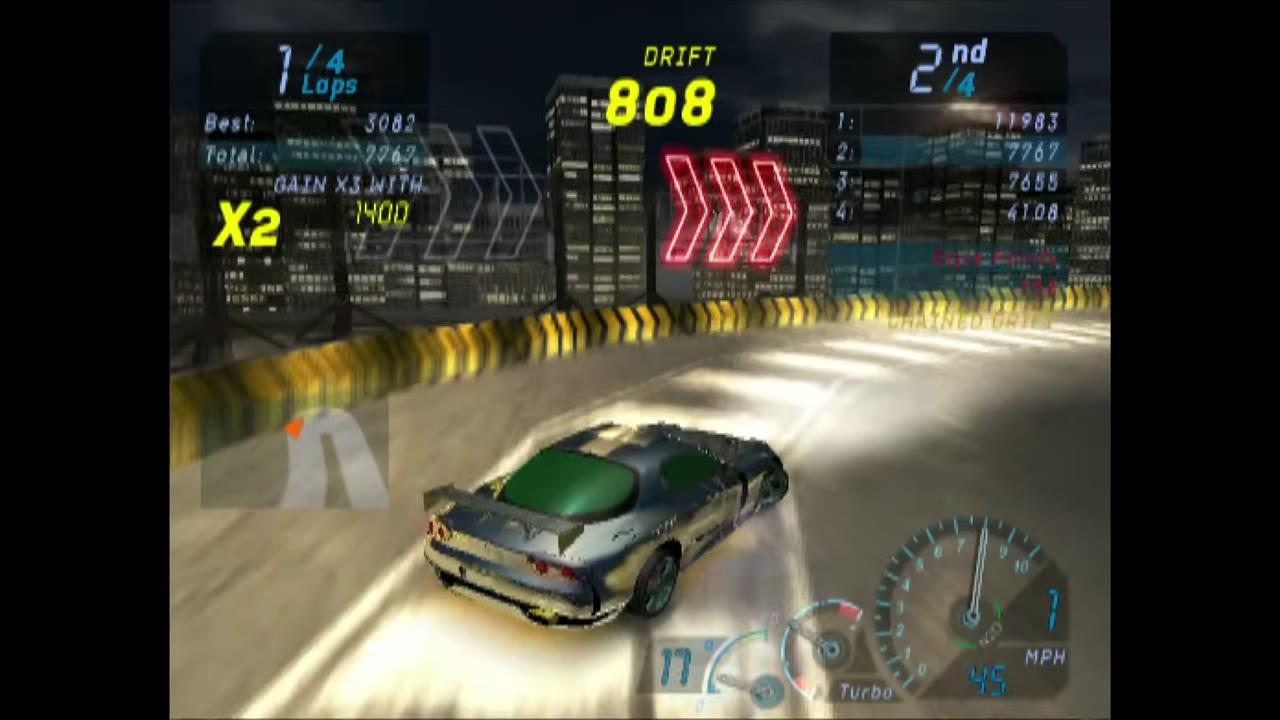
There isn’t much new content to keep you locked into Need for Speed: Underground once you finish the Underground mode, but that hasn’t stopped me from revisiting the campaign numerous times. Split-screen and online can always be fun for a distraction, but replaying the whole game again to try and unlock any magazine covers you missed is what I would consider the main draw.
Other Versions
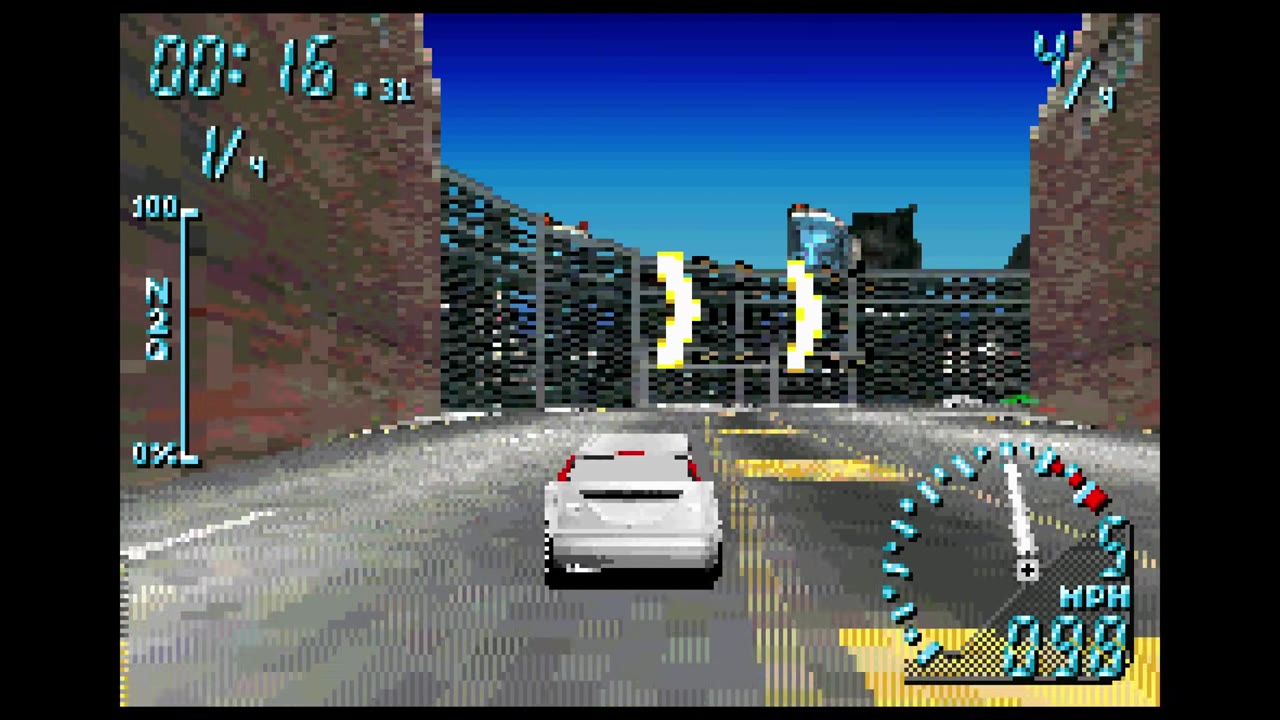
In addition to the Console and PC versions, Need for Speed: Underground has a port for the Gameboy Advance. This version of the game is truly a unique experience… Visually, it is a muddy mess, even on a GBA screen, and the audio is scathing. I can appreciate the scope the developers of this port were trying to achieve with a fully 3D game on the Gameboy Advance hardware, but it just isn’t that fun to play.
Verdict
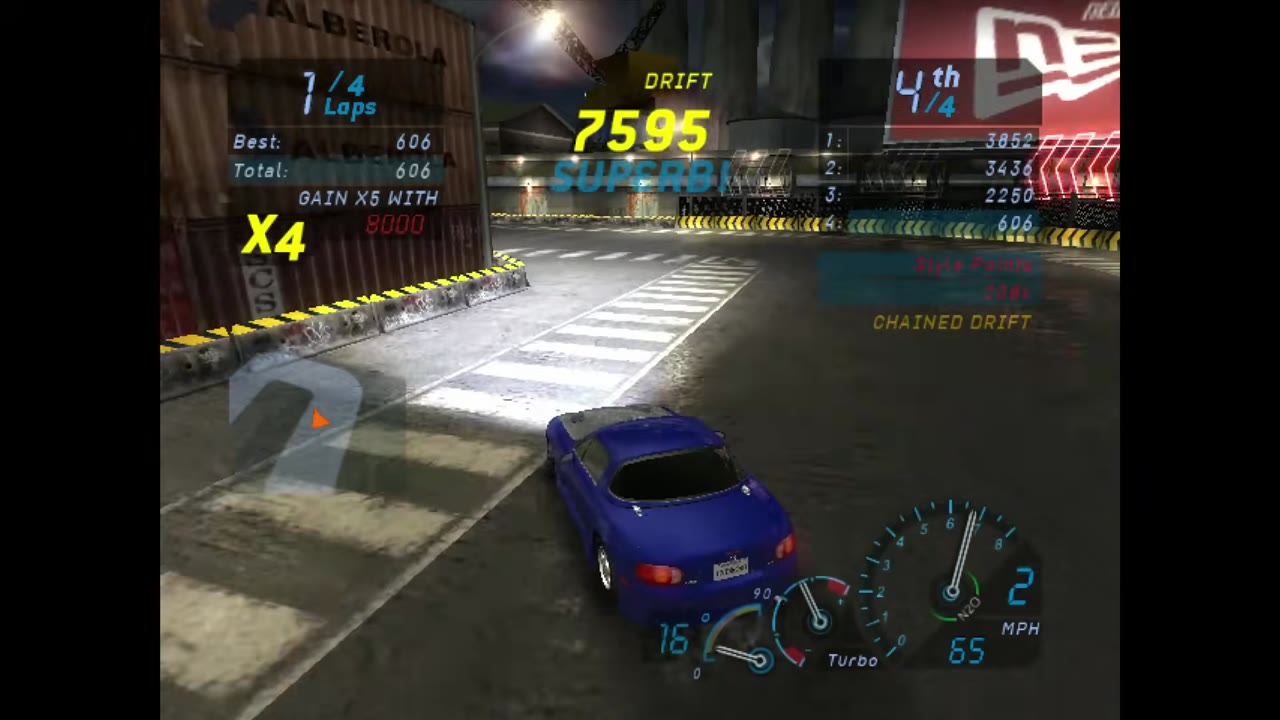
Need for Speed: Underground lets you live out your street racer fantasies, and it still holds up well today with great Gen 6 visuals and an excellent soundtrack! With solid controls, tracks, and modes, there is a lot to enjoy with a playthrough of Underground. Some may see the lack of an open world map and police chases as a negative, but I find it makes the game more focused as a result. While I acknowledge the game may be overhyped and not as appealing to diehard racing fans, we casuals can always come back to Underground for a good time!