I can easily claim Star Wars Rogue Squadron as one of my five favorite franchises. I have loved it since the original game was released on N64 and its sequel is responsible for starting this channel. Even its prequel-based spiritual cousin Battle for Naboo maintains a spot in my replay list. Then there is Rogue Squadron 3… When the game was released in 2003 I was incredibly hyped for it. Preview articles in various gaming magazines had me hanging on every screenshot and the revelation that we would be leaving the cockpit was a point of curiosity. Unfortunately, I felt let down by the final product and have lacked interest in it ever since. Over the last few years, I have tried to be more open to what the game tried to accomplish and mostly it is still a good title, but there are just some things I can’t forgive it for.
Story
Rogue Squadron 3 continues the story of the Rebellion vs the Empire through the eyes of Rogue Squadron’s Luke Skywalker and Wedge Antilles. With events set during and between the Star Wars movies, we are given a glimpse at the wider conflict across the galaxy. New characters are introduced and themes of betrayal and loyalty are present throughout. Story content is presented through various cutscenes and in-game dialogue. For certain missions, clips from the movies are used though I have always had mixed feelings on their inclusion. Unfortunately, due to the way missions are structured, the overall plot can come across as disjointed with its timeline.
Gameplay
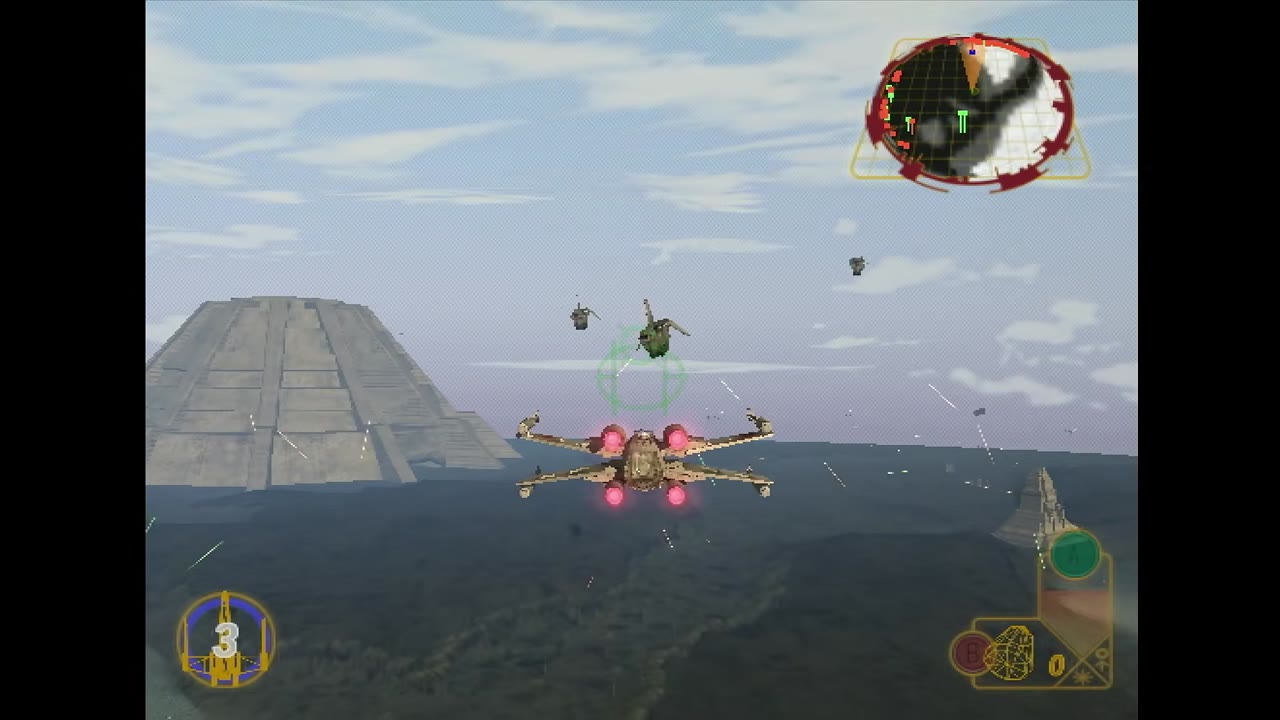
The Rogue Squadron franchise has always been known for its excellent arcade flight sim gameplay. In Rogue Squadron 3 these flight mechanics are as solid as ever with excellent controls and feel that make great use of the GameCube controller’s features. Using the Right Trigger accelerates your craft while the Left Trigger decelerates it. Both Triggers use analog input so you can precisely dial in your speed. Certain craft also have a secondary effect, such as a speed boost or closing your craft's wings, that will activate when you fully pull the Right trigger and press its button. Primary weapons are assigned to the A button while secondary weapons are mapped to B. Using X will switch you between a third-person camera perspective and the cockpit. Y is assigned to your targeting computer that will highlight enemies and show objectives you need to target. The D-pad is used to control your wingmen and activate special commands in various missions.
Each of the game's 11 ships has unique strengths and weaknesses. The X-wing remains the most well-rounded with great offensive and defensive capabilities. The A-wing, B-wing, Y-wing, and Snow Speeder also appear. The Millenium Falcon, Naboo Starfighter, and Slave 1 once again grace the flight deck but are joined by the Jedi Starfighter featured in Star Wars Episode II Attack of the Clones. As with past games, Imperial craft can also be flown, with the Tie Bomber and Tie Hunter being featured this time around. While you can’t use every craft right from the start, being able to try out each for various missions can help with earning the game's coveted medals and, by extension, unlock more of the ships!
There have been some improvements made in a few of the ship's secondary weapons to help them be more useful. Concussion missiles found on the A wing and Millenium Falcon no longer burst fire and have a great homing ability that quickly locks on and chases targets. Y-wing bombs feel more devastating and the cluster upgrade feels impactful in a group of targets. One of my favorite additions is the sonic mines from Attack of the Clones. They are incredibly powerful and satisfying to use.
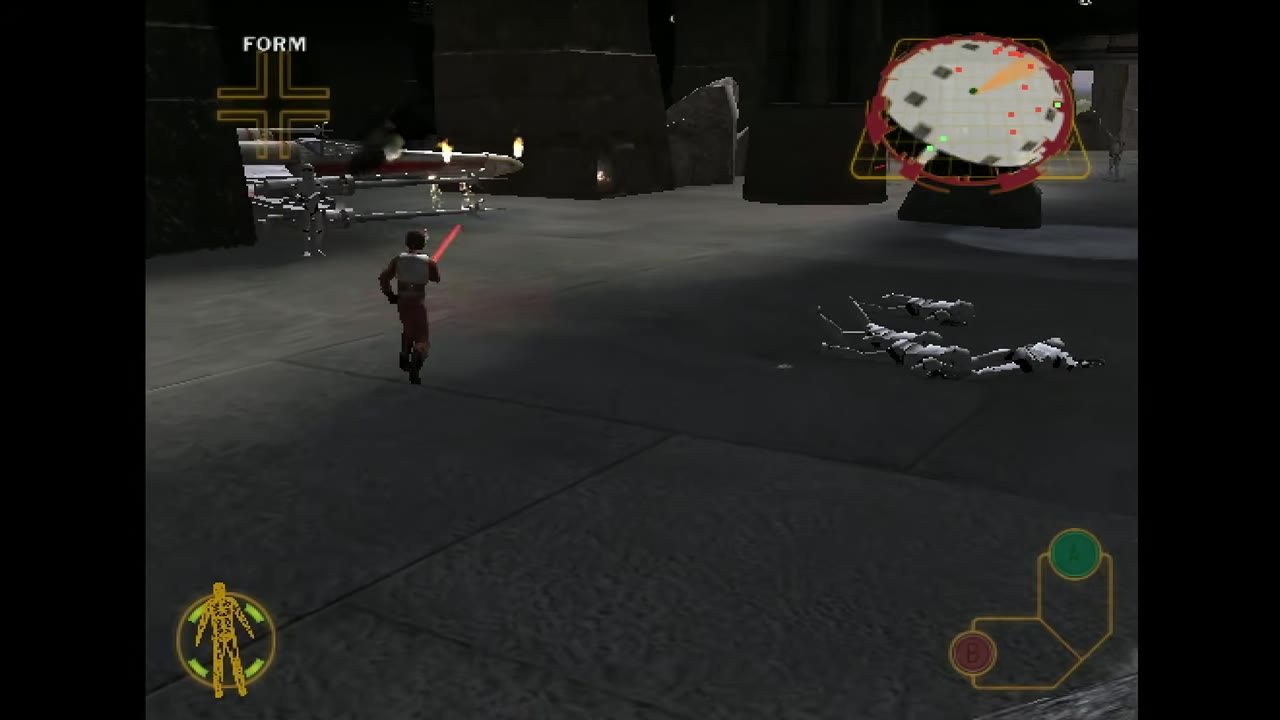
Unfortunately, only 10 of the 19 missions are, or feature, flight segments with a vast majority of the game's playtime taking place out of the cockpit, whether on foot, on a Speeder Bike, or in an AT-ST. Considering this is a Rogue Squadron game, putting flight in a secondary position is certainly a questionable decision. To make matters worse, the on-foot segments are incredibly clunky. Utilizing a single-stick control scheme with a locked camera was awkward in 2003 and after 20 years this hasn’t changed. To further degrade the experience, all aiming is done with an automatic lock-on system.
There are numerous times when you will be firing into the void and hoping you are hitting something if you don’t run right up to it. Each foot segment is also incredibly linear and narrow, often taking place in closed spaces. While this last point isn’t necessarily a negative, having a proper twin-stick control setup with a free camera and targeting reticle would have made a huge difference to how they played. Various levels also have platforming segments that are some of the worst I have ever played for their absolute pointlessness. Considering 12 of the game’s levels are, or feature, on-foot segments this is a lot of jank to ask of players looking to play a Star Wars arcade flight sim to go through.
The 5 Speeder Bike and AT-ST levels/segments fare a bit better than the on-foot ones and feel like a call back to the ground vehicle segments of Battle for Naboo. The Speeder Bike does a great job of conveying a sense of speed and its burst laser makes quick work of Probe droids and other Speeder Bikes. Unfortunately, it also introduces a janky bump mechanic in the Endor level. You are supposed to bump the enemy Speeder Bikes into the surrounding trees but due to the way the physics works, you are just as likely to wipe yourself out by attempting it. Instead, using brakes or boosts to break free often provides better results.
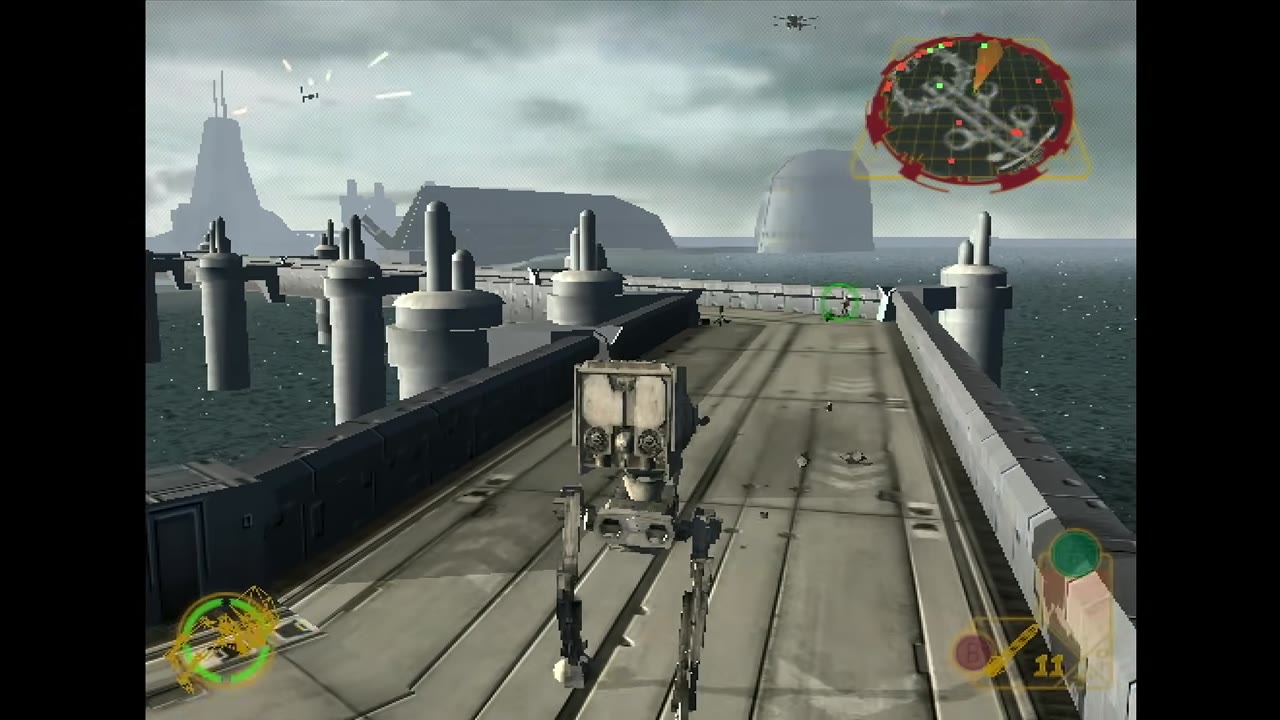
AT-ST play was first introduced back in Rogue Squadron on N64 as a bonus you could unlock with passcodes. Seeing it become a playable vehicle in the main campaign was truly a treat. Controls are a bit awkward but overall passable. Holding the Right Trigger moves you forward while A and B control primary and secondary fire respectively. Aiming is done with your reticle but it has free movement across your entire screen which can be awkward. By holding the Left Trigger you can lock the reticle to a single point on your screen to make aiming a bit easier at the expense of your movement. You may also encounter some collision weirdness near walls or other obstacles which has led to more than one unintentional death during my years with the game.
The main campaign is 14 missions split between a Luke path and a Wedge path. The Wedge path features more flight missions while the Luke path has more foot segments. 5 additional bonus missions are available to be purchased with in-game points earned by achieving medals. Unfortunately, 4 of these levels are on-foot with only one being a true flight mission. Achieving gold medals is one of Rogue Squadron 3’s main goals and the requirements are pretty forgiving compared to past games. As a result, a new medal tier of Best Ever has been included that will push your skills at the game further.
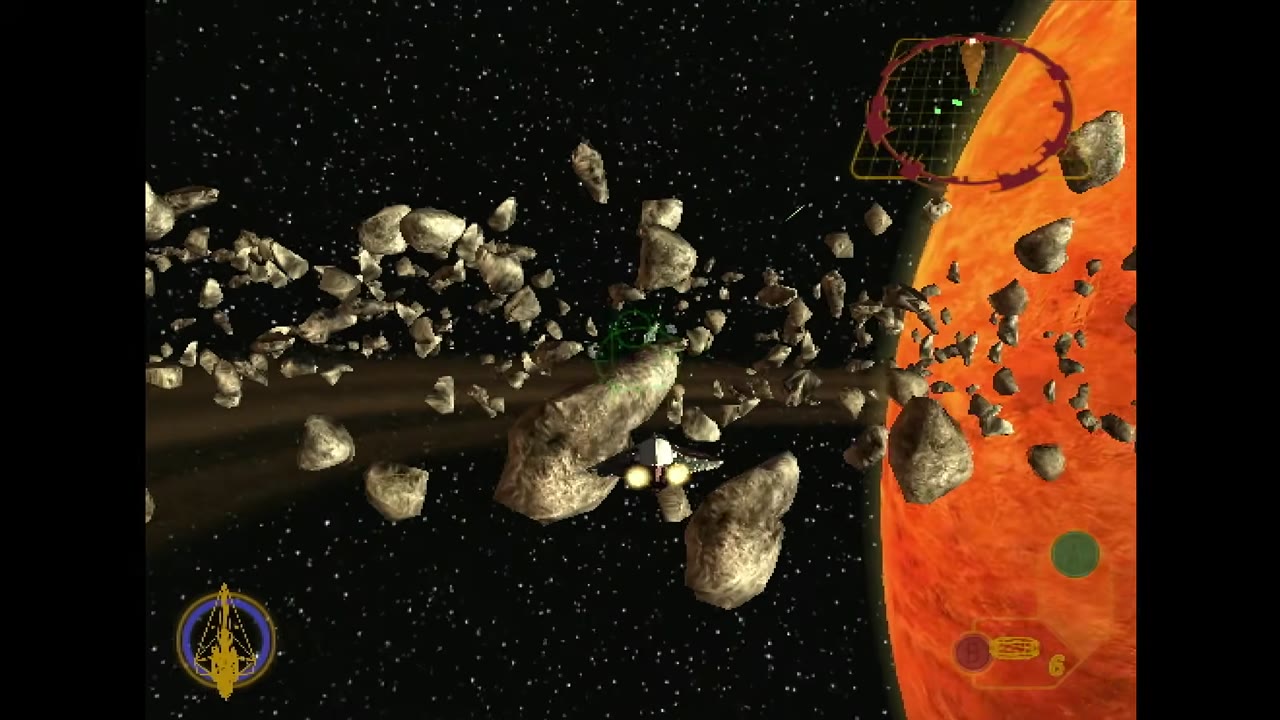
To help in achieving medals, numerous upgrades can be found hidden throughout missions that can increase your damage output or give your missiles homing capabilities. As previously mentioned, achieving all the medals will unlock additional ships for you to play with, making them worth pursuing. Getting every gold will also allow you to play in Ace Mode for an even more challenging experience. If doing that amount of grinding doesn’t sound like your idea of a good time, Rogue Squadron 3 features passcodes that will unlock everything for you.
The best addition to Rogue Squadron 3 was its inclusion of multiplayer gameplay for the first time in the franchise. A full co-op mode of Rogue Squadron 2 is the main draw that features all 10 of that game's story missions and 3 of its bonus missions. Because there are two players, changes were made to the enemy density but it is a great way to experience one of the best Star Wars flight games ever made. Unfortunately, it has some stability problems and can crash from time to time. If you unlock the Jedi Starfighter before beating the Raid on Bespin level you can also softlock your progress as one of the A-wings needed for that level will be replaced. Various vs mode game types are also available with dogfights being my favorite of the bunch.
Audio
The audio work in Rogue Squadron 3 is incredible! Using a mixture of original themes and John Williams score combined with authentic sound effects makes each level feel like it is right out of the movies. Thanks to Dolby Pro Logic II, the game even features 7.1 audio support to make the action more immersive. The sonic mine sound effect and resulting destruction remain one of my favorites to date! Unfortunately, some of the voice work is below average and it doesn’t help to hear the sound-alikes saying lines directly after a clip of the movie.
Visuals
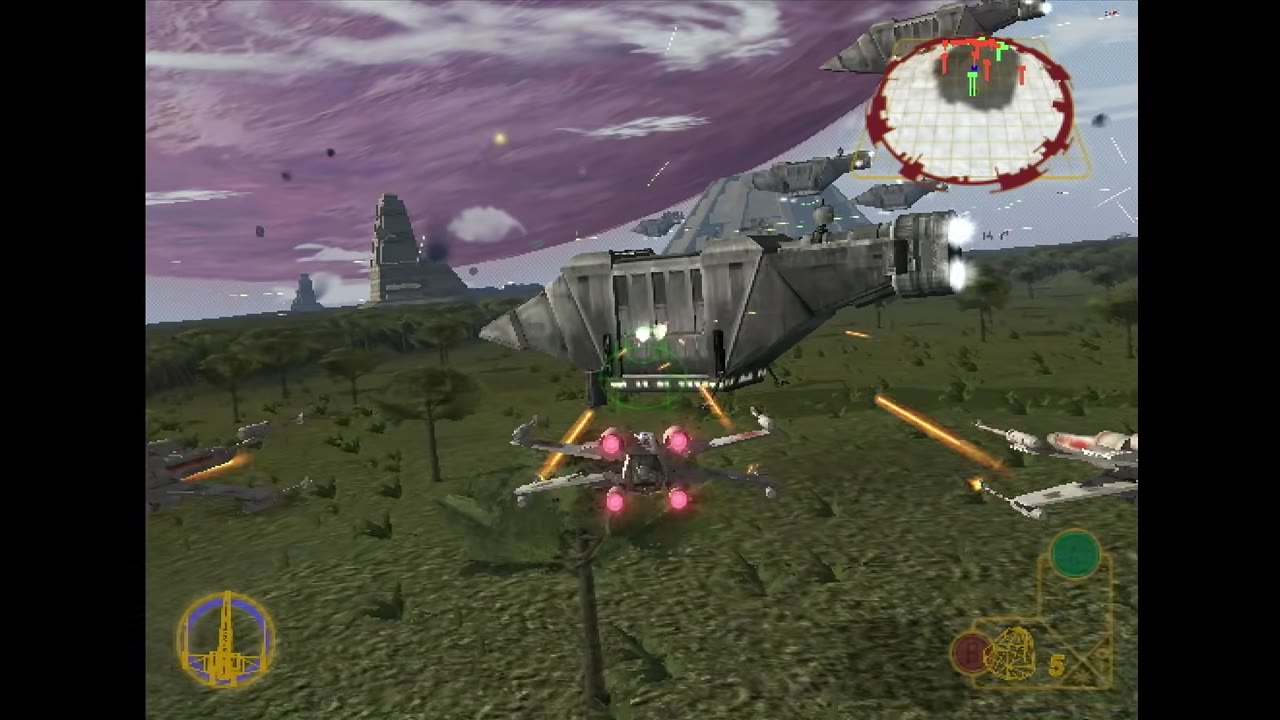
Rogue Squadron 3 remains one of the most visually impressive GameCube games released for realistic visuals. Models are incredibly detailed across all craft and characters with fantastic texture work. Environments are nicely detailed and the space skybox is often accompanied by something pleasing to look at. Explosions of bigger objects have been upgraded over past entries with more visual debris and larger explosions. Unfortunately, these improvements have come at the cost of performance with numerous moments of the game having noticeable frame rate drops compared to Rogue Squadron 2. There are also times when textures don’t load properly on various objects, displaying rainbow artifacts instead.
What It Could Have Done Better
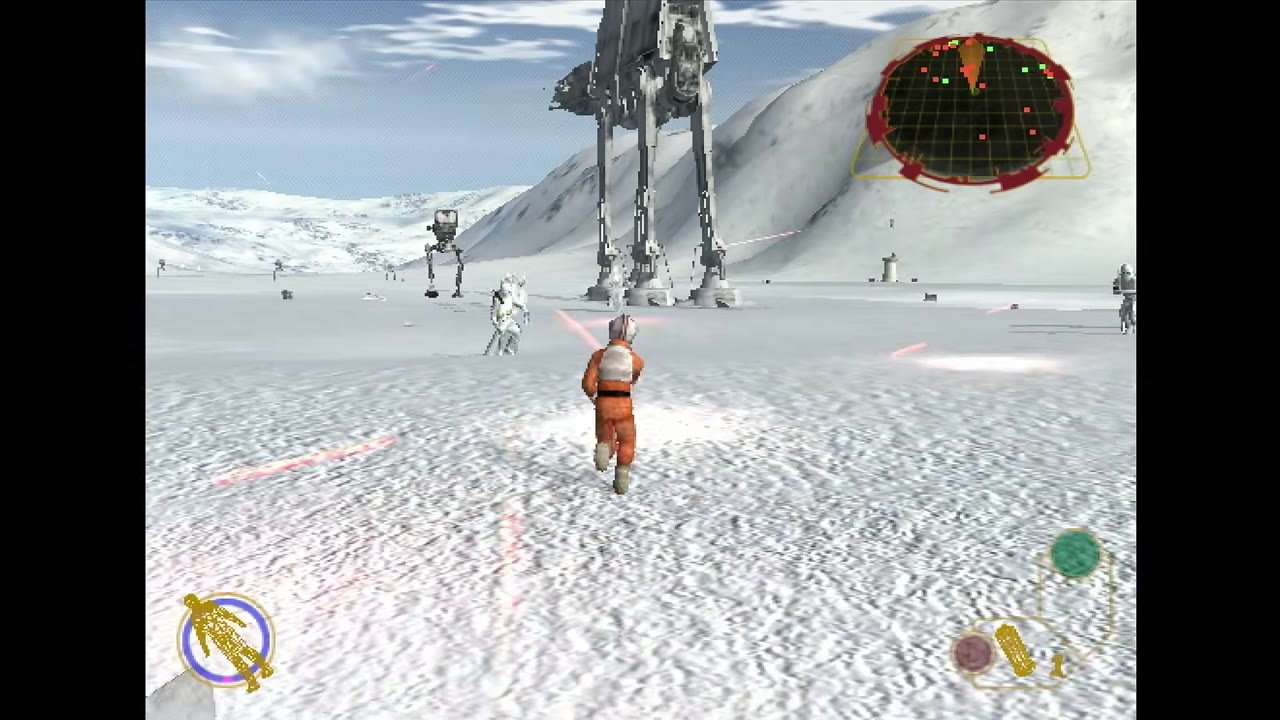
My biggest complaint with Rogue Squadron 3 is its focus on foot missions. The franchise was built around flying so having more non-flight missions has always sat wrong with me. Combine this with the fact that these on-foot segments are incredibly jank and can include incredibly pointless platforming hurts it even more. A twin-stick setup for its controls and free camera movements would have gone a long way to remedy some of the issues. I also wish that the game had stuck to a linear level selection over the branches as it would have helped the overall narrative and given a better sense of what order they should have been played in. If you jump straight to the Wedge missions you won’t understand why a certain character is now with the Empire. A few improvements to the way AT-ST collision and Speeder Bike bumper moments handle would have also helped elevate the sense of overall polish. Co-op mode freezing and soft lock fixes were also desperately needed.
Replayability
The main draw that will keep players coming back to Rogue Squadron 3 for single-player experiences is earning all of the gold or Best Ever medals. Co-op play is the biggest reason to keep a copy of Rogue Squadron 3 on hand. Rogue Squadron 2 had great missions and playing them with friends is a fantastic time. The other multiplayer vs modes can also give you hours of enjoyment. Another cool addition to Rogue Squadron 3 is the unlockable version of all three Star Wars arcade games. While only Star Wars and The Empire Strikes Back are unlockable by making in-game progress, Return of the Jedi can be unlocked with a passcode for you to enjoy.
Verdict
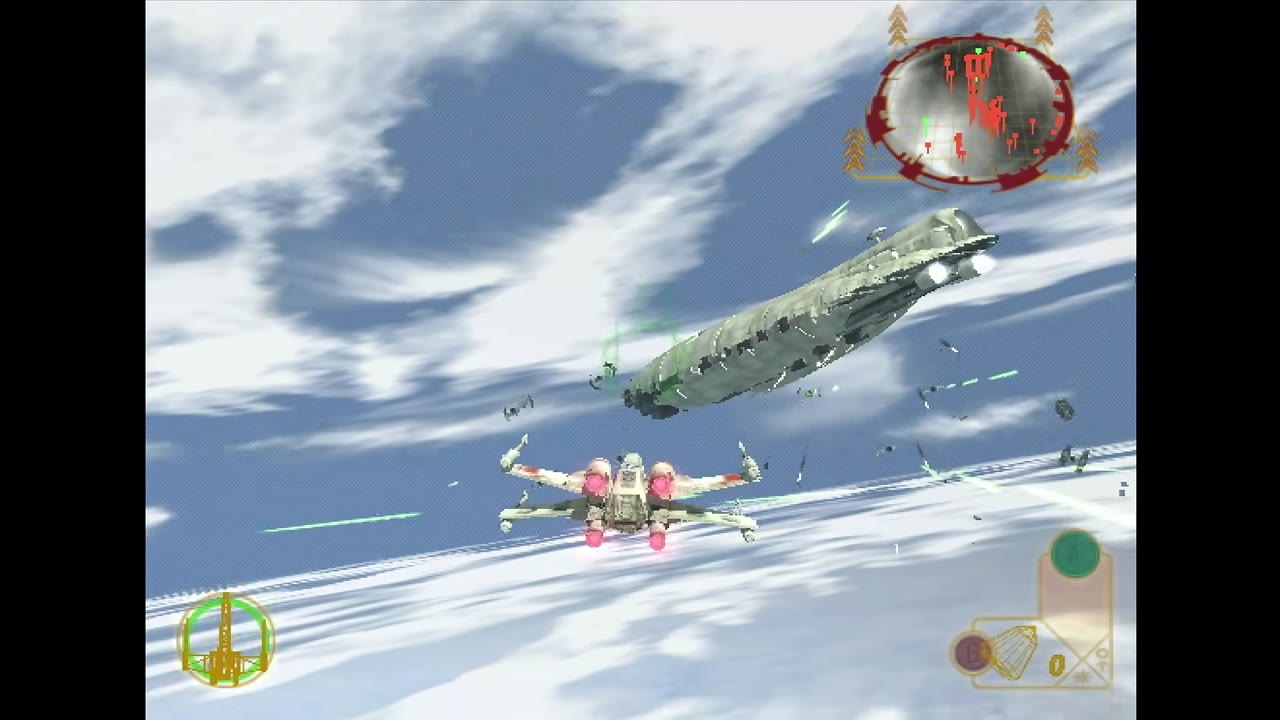
While not as great as its predecessor, Rogue Squadron 3 manages to still be an overall great package thanks to its solid flight levels and inclusion of a full co-op mode of Rogue Squadron 2. The game looks beautiful regardless and the audio is on par with the movies in most regards. I do wish that Factor 5 had kept a focus on flight missions over ground-based ones, or at least included decent controls for these segments, but I can appreciate their wanting to try new things. Rogue Squadron 3 can still be had for a decent price these days so if you want to experience its most memorable moments it is worth the investment.